Sirtuin Inhibitors & Activators
Sirtuins are a unique family of Class III histone deacetylases that are distinguished by their requirement for nicotinamide adenine dinucleotide (NAD+) as a cofactor for their catalytic activity. In humans, there are seven Sirtuin isoforms (SIRT1-7), which are localized to different cellular compartments: SIRT1, SIRT6, and SIRT7 are primarily nuclear; SIRT2 is predominantly cytoplasmic; and SIRT3, SIRT4, and SIRT5 are mitochondrial. This diverse localization allows sirtuins to regulate a vast array of biological processes, including DNA repair, metabolism, mitochondrial function, and the cellular response to oxidative stress. SIRT1, the most extensively studied member, targets both histones and non-histone proteins such as p53, PGC-1alpha, and FOXO transcription factors, playing a pivotal role in longevity and metabolic health. The therapeutic interest in sirtuins is bifurcated into the development of activators and inhibitors.
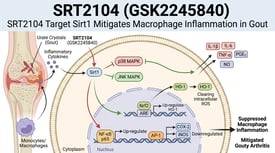
Sirtuin-activating compounds (STACs), such as resveratrol and the more potent synthetic derivatives like SRT1720 and SRT2104, have been widely researched for their potential to treat metabolic syndrome, type 2 diabetes, and age-related neurodegenerative diseases. These activators aim to mimic the beneficial effects of caloric restriction by enhancing SIRT1 activity, thereby improving insulin sensitivity and mitochondrial biogenesis. Conversely, sirtuin inhibitors are being explored primarily for oncology. SIRT1 and SIRT2 are often overexpressed in various cancers and can promote tumor survival by deacetylating and inactivating tumor suppressors like p53. Inhibitors such as sirtinol, cambinol, and the SIRT1-selective selisistat (EX-527) have shown preclinical efficacy in inducing apoptosis and sensitizing cancer cells to chemotherapy.
Selisistat has also been investigated in clinical trials for Huntington's disease, highlighting the complex and often context-dependent roles of sirtuins in different pathologies. The classification of sirtuin modulators is typically based on their target selectivity and chemical structure, ranging from natural polyphenols to highly specific small-molecule inhibitors. One of the primary challenges in the field is the dual role of sirtuins in cancer, where they can act as either oncogenes or tumor suppressors depending on the specific isoform and the tumor microenvironment. Furthermore, the bioavailability and metabolic stability of many early STACs have been limiting factors in their clinical translation. Current research is focusing on the development of next-generation modulators with improved pharmacokinetics and a deeper understanding of the mitochondrial sirtuins (SIRT3-5), which are emerging as critical regulators of metabolic flexibility and antioxidant defense.
The relationship between sirtuin activity and NAD+ levels has also led to the exploration of NAD+ precursors, such as nicotinamide riboside (NR) and nicotinamide mononucleotide (NMN), as indirect sirtuin activators. These strategies are currently being evaluated in numerous clinical trials for their ability to improve cardiovascular health and combat age-related decline, making sirtuin modulation a cornerstone of modern geroscience and precision metabolic medicine.