SCD Inhibitors
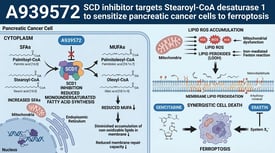
Stearoyl-CoA desaturase (SCD), particularly the SCD1 isoform, is a rate-limiting enzyme in the biosynthesis of monounsaturated fatty acids (MUFAs), primarily oleate and palmitoleate, from saturated fatty acids (SFAs) like stearate and palmitate. This enzymatic reaction is crucial for maintaining the proper ratio of SFAs to MUFAs, which influences membrane fluidity, lipid metabolism, and cellular signaling. SCD1 is highly regulated by dietary factors and hormones through the SREBP-1c signaling pathway. Overexpression of SCD1 is associated with a variety of metabolic disorders, including obesity, insulin resistance, and non-alcoholic steatohepatitis (NASH), as well as several types of cancer. In oncology, SCD1 is often upregulated to support the increased demand for membrane synthesis and to protect cancer cells from lipotoxicity induced by SFA accumulation.
The mechanism of action for SCD inhibitors involves binding to the enzyme’s active site, which contains a di-iron center, thereby blocking the desaturation process. This leads to an increase in the SFA/MUFA ratio, disrupting lipid raft formation and inhibiting oncogenic signaling pathways such as PI3K/Akt and Wnt/beta-catenin. Currently, several SCD1 inhibitors have reached clinical trials. Aramchol, a bile acid-fatty acid conjugate, is being evaluated in Phase III trials for the treatment of NASH, showing promising results in reducing liver fat content. Other small-molecule inhibitors, such as GSK1940029 and various heterocyclic compounds, have been explored in preclinical models for both metabolic and malignant diseases.
Classifications of SCD inhibitors are generally based on their chemical structure, including sulfonamides, ureas, and pyridazine derivatives. Despite their therapeutic potential, the development of systemic SCD1 inhibitors has faced significant challenges, most notably "on-target" toxicities in the skin and eyes. SCD1 is essential for the production of sebum and the maintenance of the meibomian glands; its inhibition can lead to severe dry eye syndrome (xerophthalmia) and skin alopecia. To mitigate these side effects, researchers are developing liver-targeted inhibitors or topical formulations. Additionally, combination strategies are being investigated, such as pairing SCD1 inhibitors with ferroptosis inducers, as MUFAs are known to suppress ferroptotic cell death.
The interplay between SCD1 and other lipid metabolic enzymes, like FASN and ACC, also suggests that multi-target approaches might be more effective. As the link between lipid metabolism and immune evasion becomes clearer, the role of SCD1 in the tumor microenvironment is also emerging as a key area of study, potentially positioning SCD1 inhibitors as adjuncts to immunotherapy.