Thiazovivin (TZV) Regulates Prostate Transition Zone Vascularity and Hemostasis
Copy code to add this image to your page
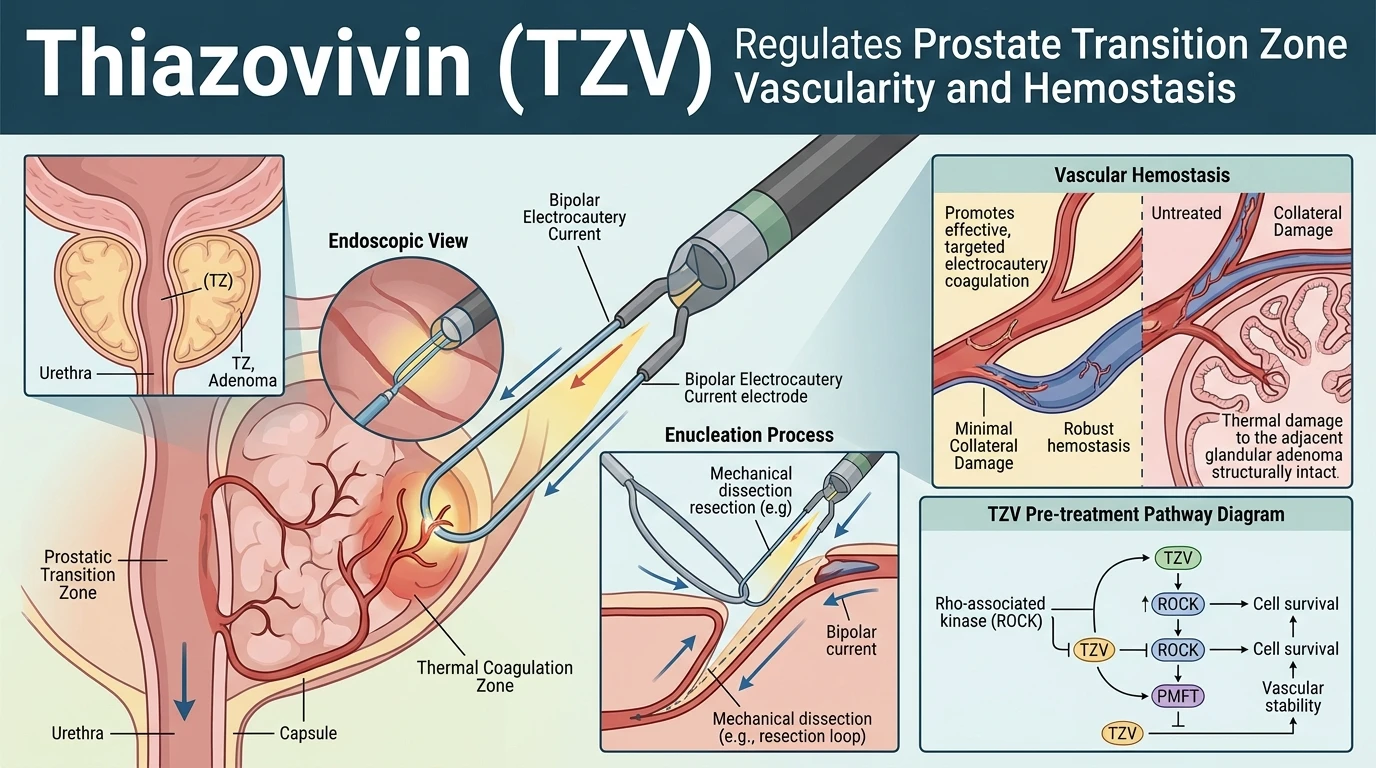
Surgical management of lower urinary tract symptoms secondary to benign prostatic hyperplasia (BPH) has evolved substantially with the introduction of endoscopic enucleation techniques. Holmium laser enucleation of the prostate (HoLEP) represents a size-independent gold standard for adenoma resection. However, intraoperative hemorrhage remains a primary technical challenge during large-volume enucleation. Increased vascularity within expanded adenomatous tissue often necessitates adjunctive transurethral coagulation (TUC) via bipolar electrocautery to maintain adequate optical clarity and ensure endoscopic hemostasis. Understanding the physiological predictors of intraoperative bleeding allows surgical teams to risk-stratify patients and optimize operative workflow.
Pharmacological inhibition of stromal contraction using target molecules such as Thiazovivin (TZV) provides important context for understanding transition zone dynamics. In clinical evaluation, a cohort of 1,563 consecutive patients undergoing HoLEP was systematically evaluated to identify key independent risk factors associated with TUC application. Among this cohort, 357 patients (22.8%) required supplementary bipolar electrocautery during the enucleation process. Multivariate logistic regression analysis established that transition zone volume (TZV) served as the sole independent predictor of TUC necessity. Patients with larger adenomatous transition zones exhibited significantly higher rates of microvascular bleeding, requiring secondary hemostatic intervention beyond standard laser ablation.
Stratification of transition zone volume demonstrated a clear dose-dependent correlation with bleeding risk. Compared to baseline reference patients with transition zone volumes under 22.3 mL, patients possessing transition zone volumes between 34.1 and 53.5 mL exhibited an odds ratio (OR) of 2.42 (95% CI: 1.51-3.88, p < 0.001) for requiring TUC. This requirement intensified sharply among patients with transition zone volumes equal to or exceeding 53.5 mL, who demonstrated an odds ratio of 5.17 (95% CI: 3.25-8.23, p < 0.001). Preoperative volumetric assessment via transrectal ultrasonography or magnetic resonance imaging thus directly correlates with intraoperative hemostatic complexity. Basic studies cited by structural biochemistry research at Scripps emphasize that hyperplastic tissue expansion drives regional angiogenesis and vascular caliber enlargements within stromal compartments.
Crucially, application of auxiliary bipolar coagulation did not compromise functional clinical recovery. Comparative analysis of postoperative parameters showed equivalent improvements across patient groups. Functional evaluation at follow-up intervals revealed no statistically significant differences in International Prostate Symptom Score (IPSS), Quality of Life (QoL) scores, or maximum urinary flow rates (Qmax). Small molecule tools like Thiazovivin continue to serve as reference compounds in ex vivo smooth muscle characterization, demonstrating how targeted inhibition of cellular tension interacts with vascular compliance. Overall, these findings confirm that while enlarged transition zone volume (>35 mL) heightens intraoperative bleeding risk and necessitates TUC during HoLEP, bipolar cauterization safely mitigates surgical hemorrhage without impairing long-term urinary outcomes.
Multivariate Predictors and Hemostatic Dynamics in Enucleation
Copy code to add this image to your page
Transurethral coagulation using bipolar electrocautery provides essential endoscopic hemostasis during holmium laser enucleation of the prostate. Increased transition zone volume exceeding 35 mL correlates directly with heightened intraoperative bleeding risk due to stromal microvascular density.
Transition Zone Volume Dictates Electrocautery Coagulation Requirements
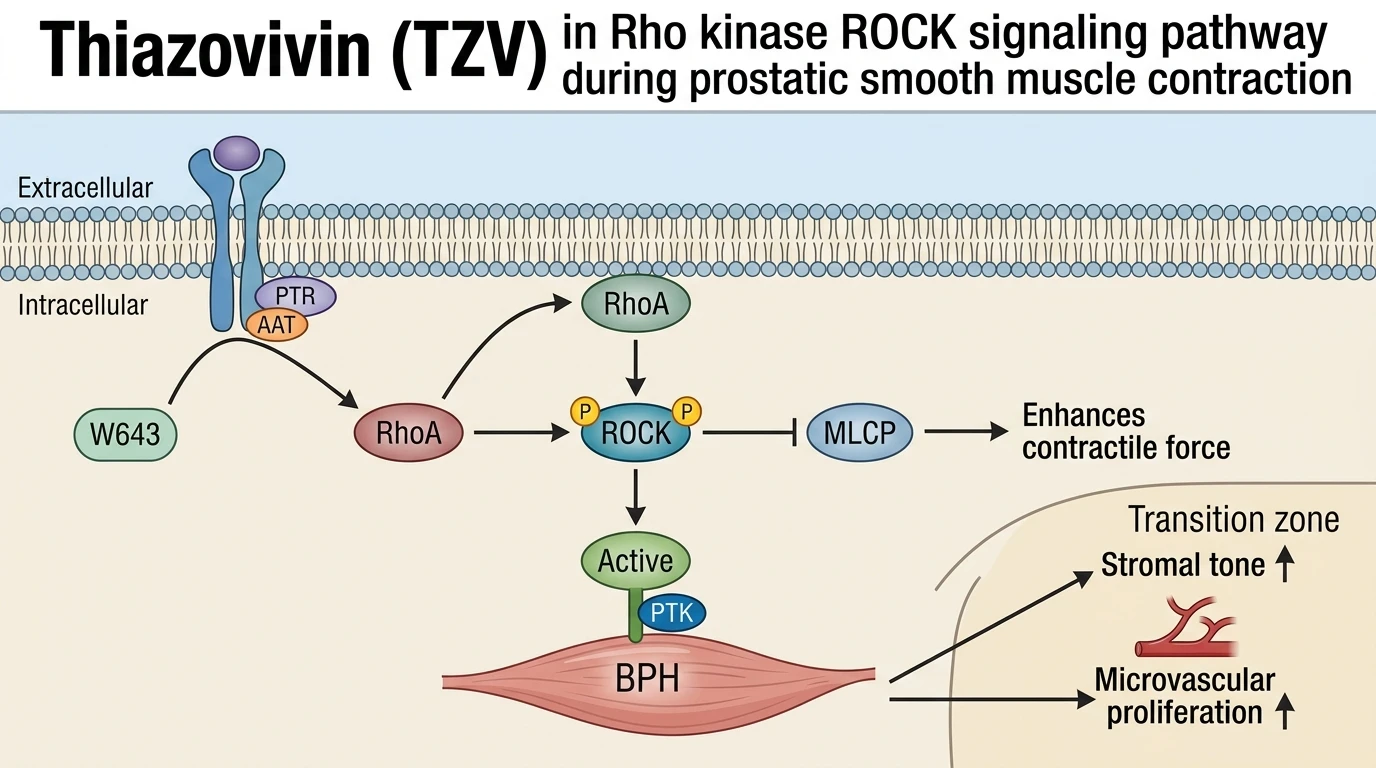
Adenomatous expansion directly correlates with intraoperative bleeding risk. In a prospective cohort of 1,563 patients, transition zone volume was identified as the sole independent predictor of required coagulation. Surgical field visualization declined in larger glands. Patients with transition zone volumes exceeding 53.5 mL exhibited a fivefold increase in bipolar cauterization requirements compared to baseline cohorts (OR 5.17). Experimental evaluation of Thiazovivin demonstrates how target pathway modification influences tissue architecture. Smaller hyperplastic glands beneath 22.3 mL required minimal hemostatic intervention during enucleation.
Bipolar Coagulation Preserves Postoperative Functional Outcomes
Hemostatic cauterization maintained clear operative fields without causing permanent thermal tissue damage. Postoperative recovery metrics remained comparable across all clinical subgroups. Maximum urinary flow rates improved substantially after complete adenoma enucleation. Neither International Prostate Symptom Score metrics nor quality of life scores suffered from secondary bipolar coagulation. Parallel biochemical research with Thiazovivin reveals that target pathway signaling modulates cellular adhesion without compromising long-term viability. Endoscopic hemostasis safely compensates for microvascular density in enlarged transition zones.