PLX4032 (Vemurafenib) Selective BRAFV600E Kinase Inhibition in Metastatic Melanoma
Copy code to add this image to your page
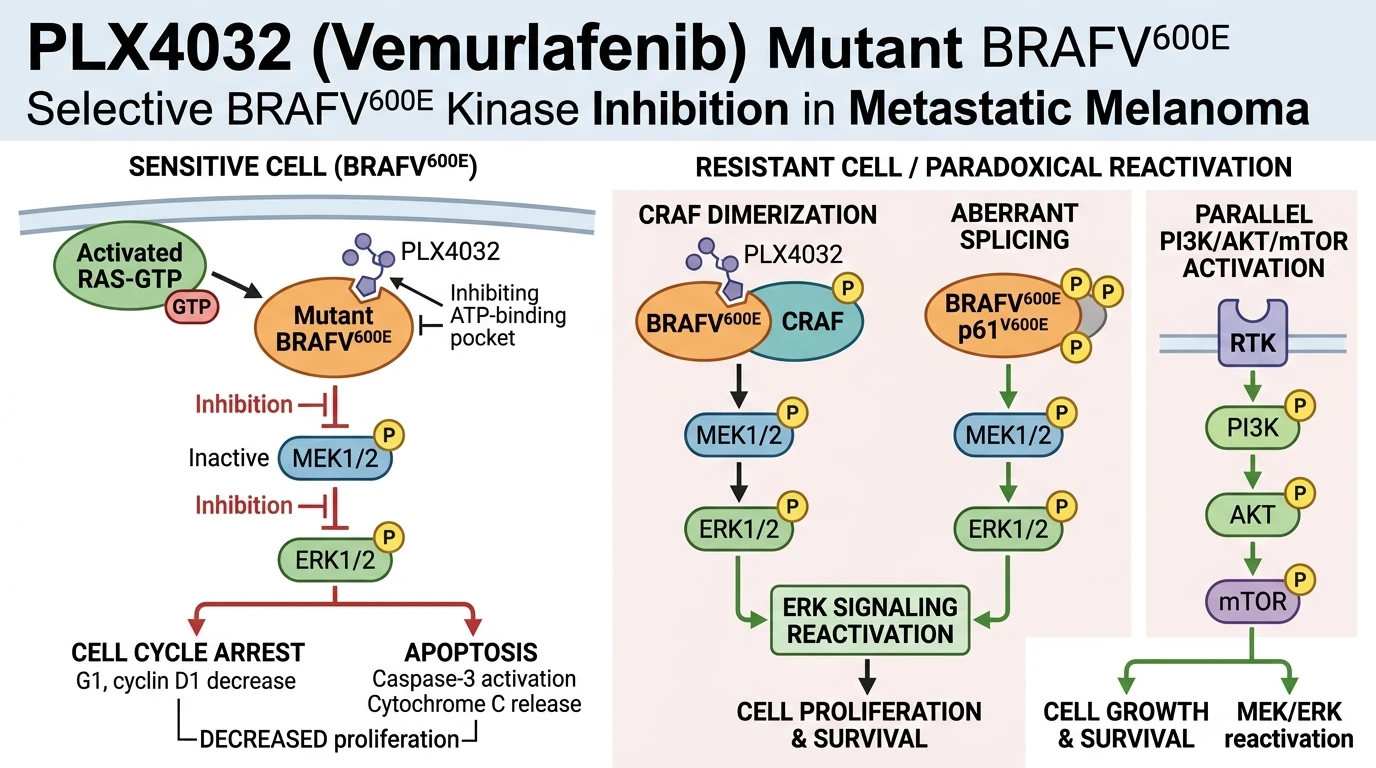
Somatic mutations in the BRAF gene occur in approximately 50% of cutaneous melanomas, with the V600E substitution accounting for over 90% of these alterations. This single nucleotide mutation replaces valine with glutamic acid at codon 600, destabilizing the inactive kinase conformation and locking the catalytic domain in a constitutively active state. The active BRAFV600E monomer signals independently of upstream RAS GTPase engagement, driving high basal kinase activity. Downstream, active BRAFV600E hyperphosphorylates MEK1 and MEK2 on key activation loop residues. In turn, active MEK phosphorylates ERK1 and ERK2, propelling hyperactivation of transcriptomic networks controlling cell cycle progression, survival, and metabolic reprogramming.
PLX4032 (Vemurafenib) was engineered as a potent, low-molecular-weight ATP-competitive inhibitor designed to target this mutated kinase state selectively. Structural and biochemical evaluations reveal that the molecule binds to the active ATP-binding pocket of BRAFV600E with high affinity. Understanding the specific chemical properties of PLX4032 highlights how its imidazopyridine scaffold forms critical hydrogen bonds within the ATP-binding cleft. By occupying this catalytic locus, the drug prevents ATP access, suppressing kinase activity and extinguishing downstream MEK and ERK phosphorylation in BRAF-mutant cell populations.
In preclinical assays utilizing BRAFV600E-mutant human melanoma cell lines, exposure to the compound resulted in rapid suppression of phosphorylated ERK within 1 to 2 hours post-treatment. This pharmacodynamic block directly suppresses cyclin D1 transcription, driving G1 phase cell cycle arrest. Simultaneously, suppression of anti-apoptotic signals triggers mitochondrial outer membrane permeabilization, elevating caspase-3/7 activity and promoting apoptotic execution. In murine xenograft models harboring BRAFV600E mutations, oral administration achieved substantial tumor regression. Human clinical trials validated these findings, demonstrating prolonged median overall survival and tumor shrinkage in previously untreated metastatic melanoma patients.
Despite high initial response rates, single-agent efficacy remains constrained by acquired resistance. Clinical cohorts routinely exhibit disease progression within 6 to 8 months of initiating therapy. Characterization of resistant tumor biopsies reveals diverse molecular adaptations that bypass target inhibition. A predominant route involves paradoxical reactivation of the MAPK cascade. Mutational events such as secondary NRAS driver mutations or CRAF overexpression facilitate RAF dimer formation. Under therapeutic drug concentrations, drug-bound wild-type or dimeric BRAF transactivates partner CRAF protomers, driving paradoxical ERK hyperactivation. Additionally, alternative splicing of BRAFV600E mRNA produces truncated isoforms that dimerize independently of RAS, rendering the kinase insensitive to monomer-selective inhibition.
Parallel signaling axes also mitigate pathway dependence under chronic drug exposure. Receptor tyrosine kinase upregulation—including EGFR, PDGFR-beta, and IGF-1R—activates parallel survival cascades. Notably, elevated RTK activity stimulates the PI3K/AKT/mTOR axis, sustaining cellular protein synthesis and anti-apoptotic signaling despite suppressed ERK levels. Overcoming these adaptation routes requires multi-node inhibition strategies, combining selective RAF blockade with downstream MEK inhibitors, PI3K targeted agents, or immune checkpoint immunotherapies.
Pharmacological Characterization and Resistance Mechanisms of BRAFV600E Inhibition
Copy code to add this image to your page
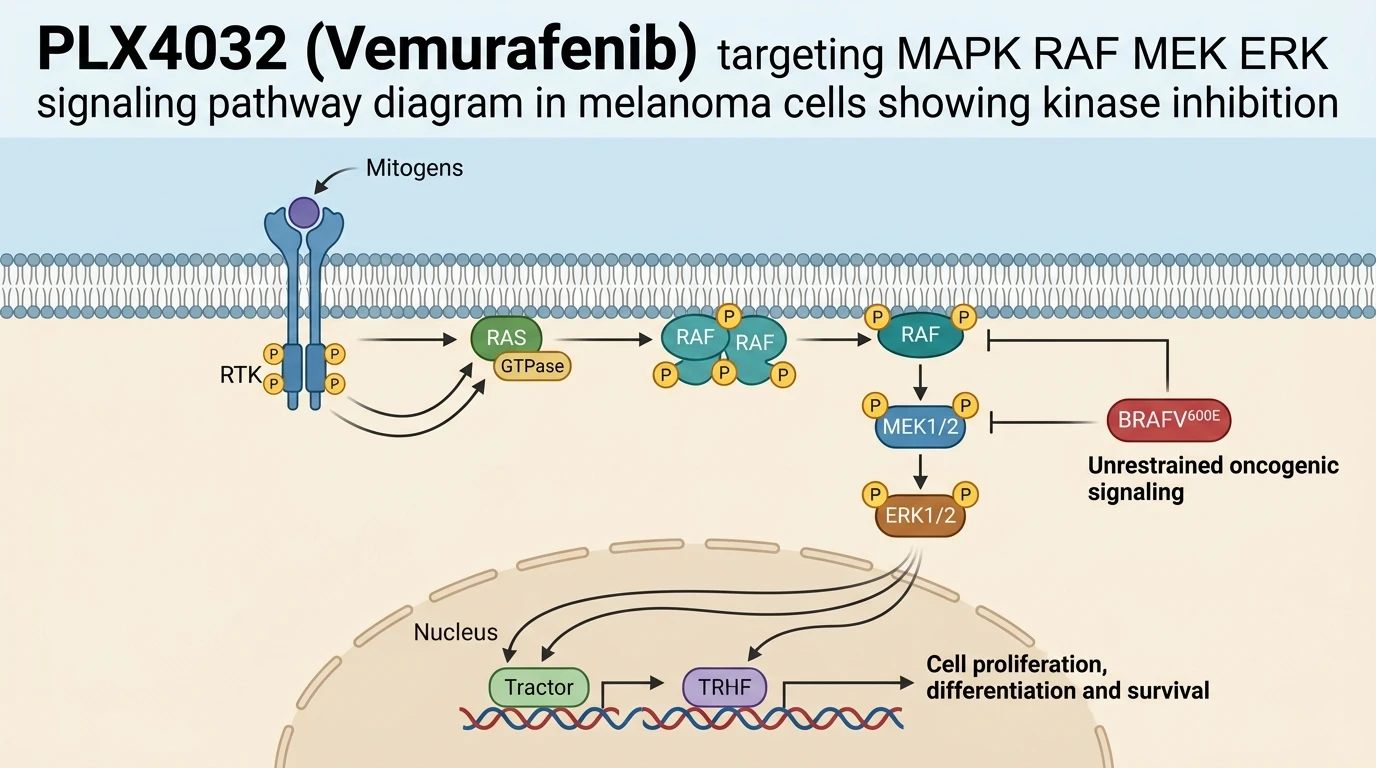
Vemurafenib selectively binds the ATP-binding pocket of mutant BRAFV600E kinase, blocking downstream MEK1/2 and ERK1/2 phosphorylation. This inhibition abolishes constitutive MAPK pathway signaling, suppressing transcriptomic programs that fuel melanoma proliferation. Consequently, treatment induces G1 phase cell cycle arrest and activates intrinsic apoptotic pathways in BRAF-mutant melanoma models.
ATP-Competitive Engagement Suppresses Downstream MEK/ERK Phosphorylation
Kinase domain binding assays confirm selective target engagement. PLX4032 exhibits nanomolar potency against the BRAFV600E enzyme while sparing wild-type RAF isoforms at equivalent therapeutic doses. Intracellular phosphorylation of MEK1/2 dropped by over 80% within two hours of treatment in tested melanoma lines. This biochemical inhibition effectively blocks nuclear translocation of ERK. Consequently, transcript levels of early-response oncogenic drivers declined rapidly. Cell cycle analysis demonstrated a sharp increase in the G1 phase population. The compound selective margin remained consistent across multiple BRAF-mutant cell cultures.
Paradoxical MAPK Reactivation Drives Acquired Drug Resistance
Therapeutic resistance typically emerges within 6 to 8 months of continuous administration. Genomic sequencing of resistant patient isolates identified driver alterations restoring MAPK flux. Aberrant splicing produced BRAFV600E variants lacking the RAS-binding domain. These p61BRAFV600E splice variants undergo constitutive homodimerization. In these dimeric structures, PLX4032 binding to one protomer paradoxically activates the adjacent non-bound kinase subunit. Downstream signaling resumes despite therapeutic drug levels. Parallel upregulation of COT kinase further bypasses RAF, directly phosphorylating MEK.
Combination Regimens Overcome Parallel Survival Pathway Activation
Alternative survival networks frequently offset RAF blockade. Re-activation of the PI3K/AKT/mTOR signaling axis was observed in resistant patient-derived xenografts. Up-regulated platelet-derived growth factor receptor-beta drives this cross-pathway bypass. Dual targeting strategies were evaluated to suppress these resistant phenotypes. Concurrent inhibition of MEK and BRAF restored apoptosis in resistant cellular models. Furthermore, pairing RAF inhibitors with immune checkpoint therapies enhanced tumor-infiltrating lymphocyte density. These dual-node regimens significantly prolonged progression-free survival in clinical evaluations.