MRTX1133 Non-Covalent KRASG12D Inhibition Suppresses RAS MAPK Signaling in Lung Adenocarcinoma
Copy code to add this image to your page
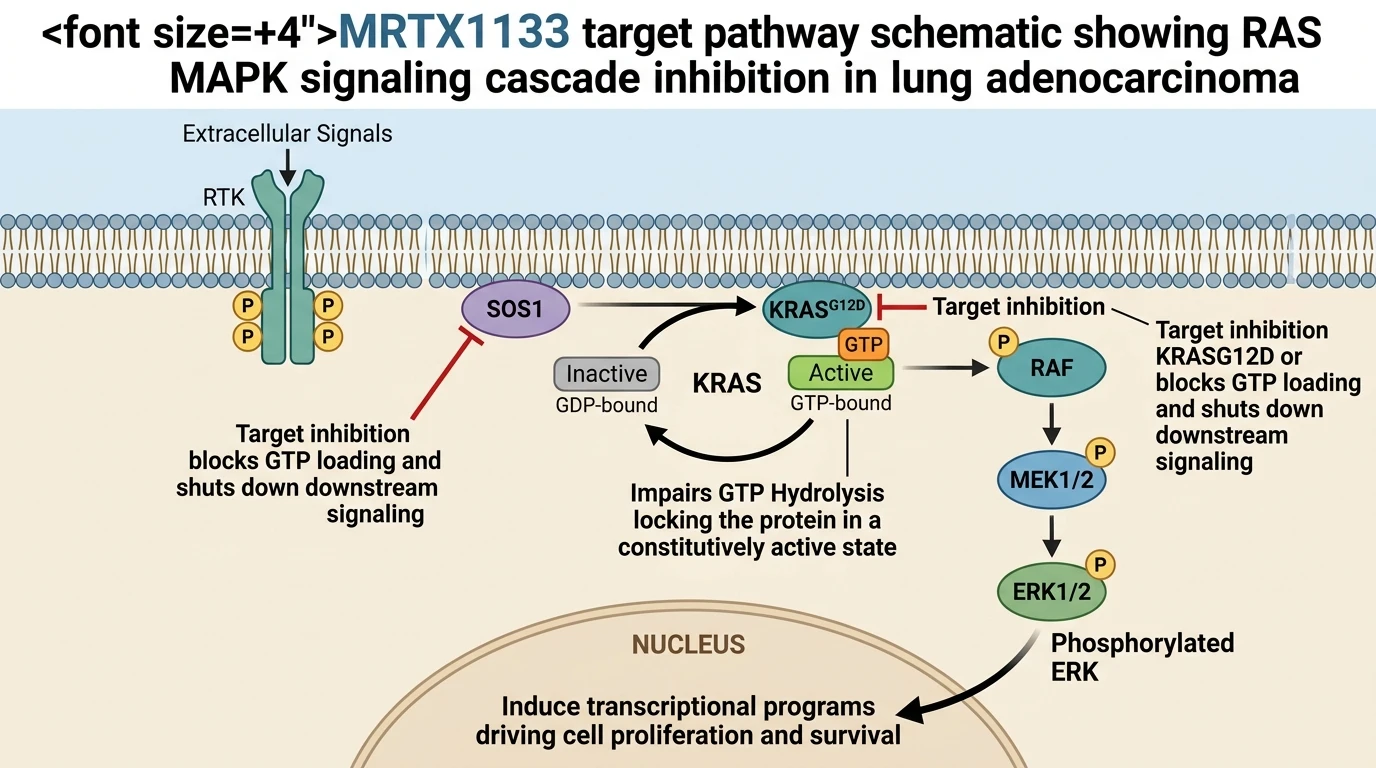
The Kirsten rat sarcoma virus (KRAS) oncogene is among the most frequently mutated drivers in human malignancies, with the KRASG12D substitution occurring prominently in lung adenocarcinoma, pancreatic ductal adenocarcinoma, and colorectal carcinoma. The G12D mutation introduces an aspartic acid residue at codon 12, sterically hindering GTPase-activating protein (GAP)-mediated GTP hydrolysis while maintaining strong binding affinity for nucleotide exchange factors. This biochemical alteration maintains KRAS in a persistently active GTP-bound state, continuously engaging downstream effector cascades, primarily the RAF-MEK-ERK mitogen-activated protein kinase (MAPK) pathway. Historically, targeted inhibition of KRAS was deemed unfeasible due to picomolar binding affinity for nucleotide substrates and an absence of well-defined hydrophobic binding pockets.
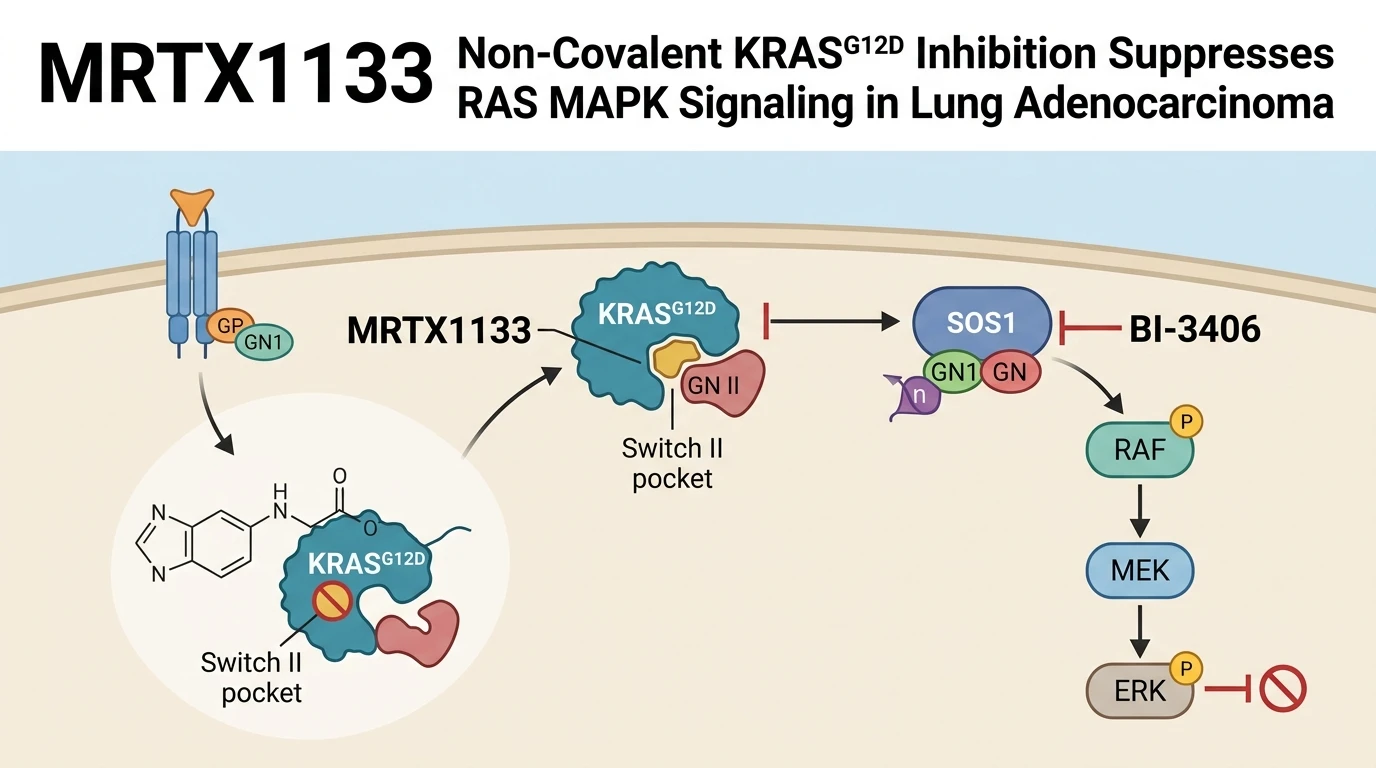
The development of MRTX1133 represents a structural shift in targeting KRASG12D. Unlike covalent inhibitors that rely on a reactive cysteine residue—such as those targeting KRASG12C—MRTX1133 operates as a non-covalent, high-affinity small molecule. The compound binds reversibly to the switch II pocket of KRASG12D, exploiting specific electrostatic and hydrophobic interactions with the mutated aspartate residue. Notably, MRTX1133 demonstrates binding affinity for both the active GTP-bound and inactive GDP-bound conformations of KRASG12D. This dual-conformation binding mechanism allows the compound to maintain target engagement regardless of the nucleotide activation state of the GTPase in target cells.
In preclinical evaluation using cell lines derived from KRASG12D-driven lung adenocarcinoma (LUAD), treatment with MRTX1133 induced dose-dependent suppression of downstream signal transduction. Biochemical analysis confirmed a rapid reduction in phosphorylated ERK (pERK) levels within two hours of exposure at nanomolar concentrations. This attenuation of downstream MAPK pathway activity directly correlated with decreased cellular proliferation and induction of apoptotic markers across multiple human and murine LUAD cell lines in vitro. Cellular response metrics revealed marked selectivity for KRASG12D mutant models over wild-type KRAS cell lines, establishing a measurable therapeutic window under standard cell culture conditions.
To evaluate these findings in vivo, researchers tested MRTX1133 in xenograft and allograft mouse models bearing KRASG12D mutations. Systemic monotherapy delivered consistent drug exposures, leading to significant regression of established tumor volumes. Pharmacodynamic analysis of harvested tumor tissues demonstrated sustained suppression of pERK over a 24-hour dosing interval. In syngeneic allograft models using immunocompetent mice, single-agent administration delayed tumor growth and extended overall survival, indicating that systemic target engagement translates into in vivo antitumor responses without eliciting severe weight loss or overt clinical toxicity.
Despite single-agent efficacy, tumor eradication in KRAS-mutant malignancies is frequently limited by upstream receptor tyrosine kinase reactivation or incomplete suppression of nucleotide exchange. To address potential feedback mechanisms, combination strategies incorporating the SOS1 inhibitor BI-3406 were evaluated. Son of Sevenless 1 (SOS1) acts as a guanine nucleotide exchange factor that facilitates the conversion of inactive KRAS-GDP to active KRAS-GTP. Concomitant administration of MRTX1133 and BI-3406 achieved synergistic inhibition of cell viability in vitro across various LUAD lines. In immunocompetent mouse models, this combination regimen resulted in deep tumor regression and induced complete pathological responses in a subset of treated animals. Crucially, the combination was tolerated, showing no significant additive toxicity or drug-drug interactions in tested murine cohorts.
Therapeutic Evaluation and Pharmacological Characterization of MRTX1133
Copy code to add this image to your page
MRTX1133 acts as a selective, non-covalent inhibitor of oncogenic KRASG12D, binding to the switch II pocket in both active and inactive states. This engagement disrupts effector interactions and suppresses downstream phosphorylation of ERK1/2 within the RAS MAPK cascade. Concomitant administration of the SOS1 inhibitor BI-3406 prevents SOS1-mediated nucleotide exchange, producing synergistic inhibition of RAS activation. Combined dual blockade leads to profound tumor regression in preclinical lung adenocarcinoma models without inducing systemic toxicity.
Non-Covalent Binding Attenuates pERK Signaling in LUAD Models
Target engagement by MRTX1133 suppresses downstream effector cascades in mutant models. In vitro assays across human LUAD lines demonstrated a rapid drop in pERK levels within two hours of drug administration at nanomolar concentrations. Cellular viability dropped sharply. This biochemical response reflects competitive binding within the switch II pocket, effectively blocking RAF recruitment to the membrane. The selectivity margin remained intact. Wild-type KRAS models retained physiological signaling at equivalent compound concentrations, establishing an adequate in vitro safety window.
Synergistic SOS1 Inhibition Enhances Pathological Regression in Vivo
Co-targeting SOS1 with BI-3406 prevents upstream nucleotide exchange on KRAS proteins. In immunocompetent mouse allografts, concomitant administration with MRTX1133 achieved deeper signaling suppression than either single agent. Downstream phosphorylation ceased almost completely. Dual target blockade produced complete pathological responses in a subset of evaluated tumor tissues, accompanied by sustained cellular apoptosis. Systemic tolerability remained uncompromised. Animal body weights were maintained throughout the dosing schedule, providing preliminary evidence against severe drug-drug interactions in vivo.