C-176 targeting STING signaling in hereditary hearing loss and molecular epidemiological profiling
Copy code to add this image to your page
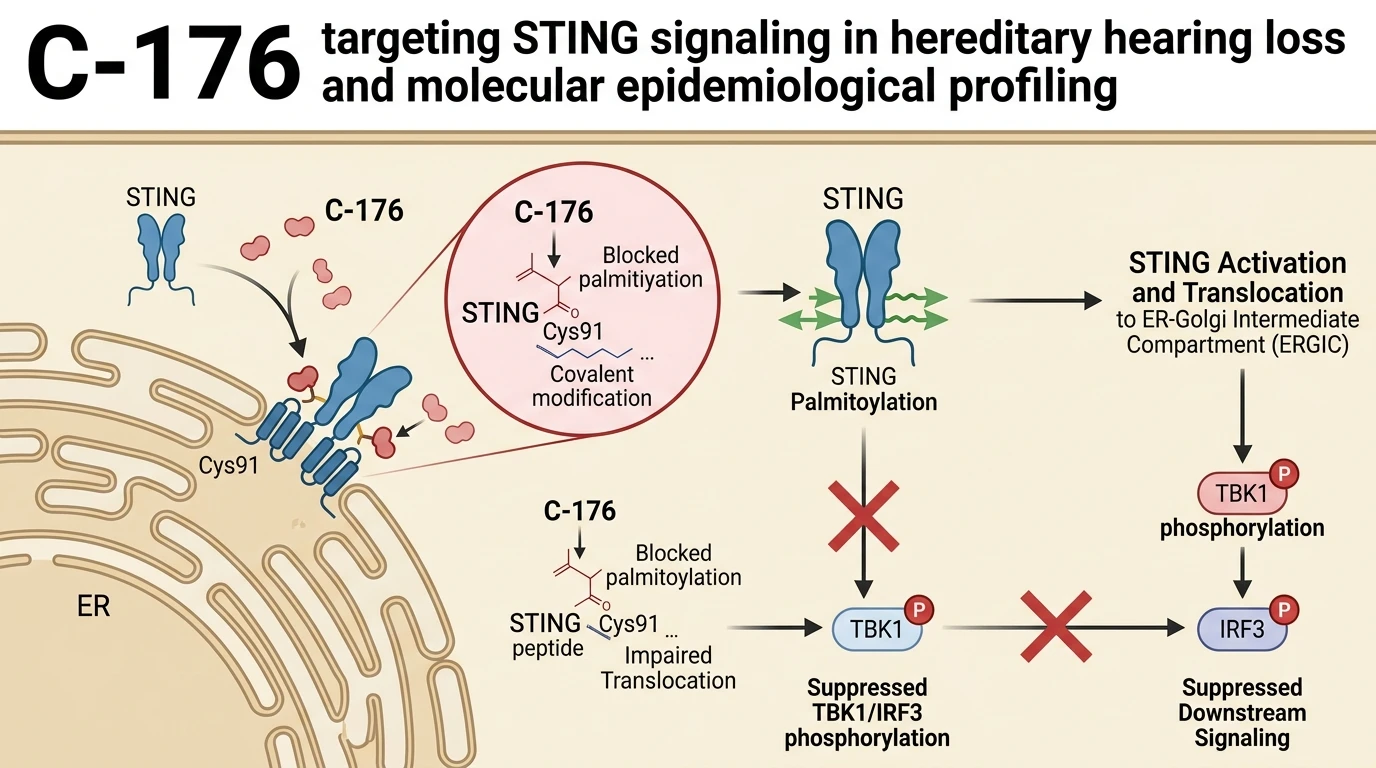
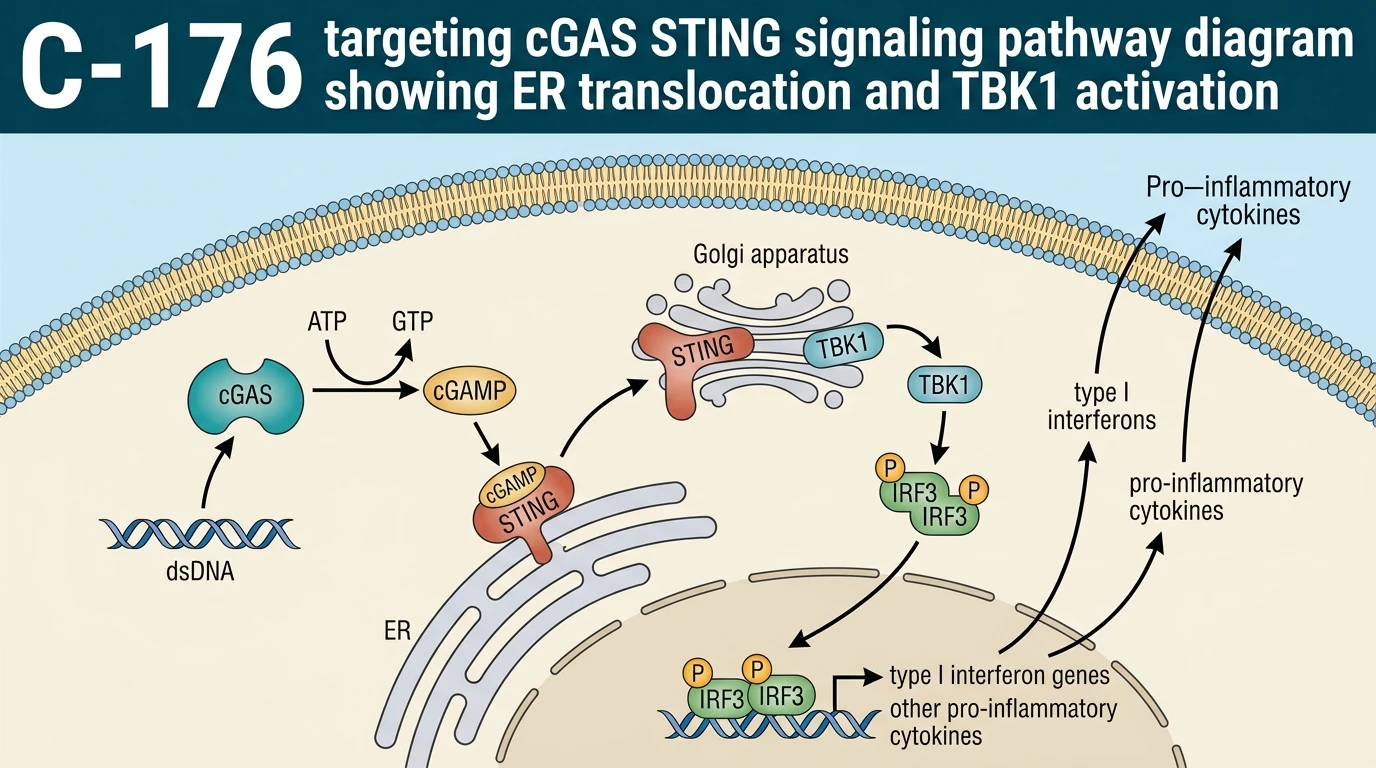
The cyclic GMP-AMP synthase (cGAS)-stimulator of interferon genes (STING) axis functions as a primary cytosolic double-stranded DNA sensor within innate immunity. Pathogenic reactivation or sustained activation of this pathway drives chronic neuroinflammation and cellular apoptosis. C-176 is a potent, selective, nitrofuran-based small molecule inhibitor that targets human and murine STING (TMEM173). Biochemical characterization demonstrates that C-176 selectively alkylates cysteine residue 91 (Cys91) located within the transmembrane domain of STING. Covalent modification of Cys91 suppresses palmitoylation at Cys88 and Cys91, a post-translational modification necessary for STING oligomerization and higher-order signalosome assembly. Consequently, C-176 prevents cGAMP-induced STING translocation from the endoplasmic reticulum (ER) to the perinuclear Golgi compartment. This blockade prevents the recruitment and autophosphorylation of TANK-binding kinase 1 (TBK1) and the subsequent transphosphorylation of interferon regulatory factor 3 (IRF3). As a result, nuclear translocation of IRF3 and transcription of type I interferons (IFN-alpha and IFN-beta) along with pro-inflammatory cytokines such as IL-6 and TNF are markedly reduced under tested in vitro assay conditions.
While cytosolic innate immune sensing regulates inflammatory tissue damage, sensorineural hearing loss (SNHL) frequently stems from monogenic genetic alterations or organelle dysfunction within inner ear structures. Molecular epidemiological studies in distinct geographic cohorts illuminate the etiology of non-syndromic hearing loss. Targeted next-generation sequencing (NGS) panels analyzing 127 candidate deafness genes in an 84-patient cohort from Southwestern China revealed high-frequency pathogenic mutations in specific loci, predominantly SLC26A4, GJB2, MYO7A, and MT-RNR1. GJB2 encodes connexin 26, a gap junction protein responsible for potassium recycling in the cochlear duct; loss-of-function variants compromise endolymphatic potential maintenance. SLC26A4 encodes pendrin, an anion exchanger regulating endolymph homeostasis; mutations trigger enlarged vestibular aqueduct syndrome. MYO7A encodes an unconventional myosin required for stereocilia hair bundle organization, while the mitochondrial 12S rRNA gene MT-RNR1 harbors variants conferring susceptibility to aminoglycoside-induced ototoxicity. Additionally, cytosolic signal transducers, including the human KRAS signal transducer, participate in parallel receptor tyrosine kinase networks that modulate cell survival in auditory sensory epithelia.
The confluence of genetic susceptibility and sterile inflammation highlights potential secondary pathological mechanisms in inner ear degeneration. Inherited structural defects caused by mutant cochlear proteins may induce cellular stress, organelle rupture, and leakage of mitochondrial DNA (mtDNA) into the cytosol. Cytosolic mtDNA engages cGAS, triggering persistent STING-dependent inflammatory signaling in supporting cells and resident macrophages. Under these physiological conditions, targeted covalent inhibition using C-176 offers a chemical tool to dissect the inflammatory component of progressive sensorineural degradation. By selectively blocking STING palmitoylation without disrupting baseline receptor tyrosine kinase signaling, C-176 isolates the contribution of innate immune activation from primary genetic structural deficits. Empirical evaluation of C-176 across murine inner ear explants and cellular models demonstrates dose-dependent suppression of phosphorylation events downstream of cGAMP stimulation, providing a defined biochemical framework for evaluating inflammatory modulation alongside monogenic epidemiology in sensory disorders.
Molecular Epidemiology and Pharmacological Pathway Interception
Copy code to add this image to your page
C-176 inhibits STING by covalently binding to cysteine residue 91 (Cys91) in its transmembrane domain. This adduct blocks cGAMP-induced palmitoylation, preventing STING oligomerization and trafficking from the endoplasmic reticulum to the Golgi apparatus. Consequently, recruitment of TBK1 and phosphorylation of IRF3 are suppressed, halting type I interferon and inflammatory cytokine expression.
Targeted Sequencing Identifies Pathogenic Variants in Deafness Genes
Targeted NGS analysis of 127 deafness genes was conducted on 84 sensorineural hearing loss patients from Southwestern China. Pathogenic variants clustered heavily within four key genes. Mutations in GJB2 and SLC26A4 constituted the primary etiology. MYO7A alterations altered stereocilia alignment in sensory hair cells. MT-RNR1 variants conferred extreme sensitivity to aminoglycosides. Diagnostic yield reached high concordance across tested pedigree samples. These genomic findings establish a clear monogenic baseline within this regional cohort.
C-176 Covalently Modifies STING to Block Palmitoylation
C-176 directly targets the transmembrane domain of STING. The nitrofuran core forms a covalent adduct with Cys91. This modification halts palmitoylation. ER-to-Golgi trafficking of STING ceased following treatment. Downstream TBK1 autophosphorylation was suppressed within hours. In cellular assays, C-176 reduced IFN-beta output substantially. Cellular viability remained stable at effective pharmacological doses. The covalent engagement mechanism provides high target selectivity over related innate immune pathways.