FK866 (Daporinad) Targeted NAMPT Inhibition Triggers Compensatory Metabolic Adaptation Mechanisms
Copy code to add this image to your page
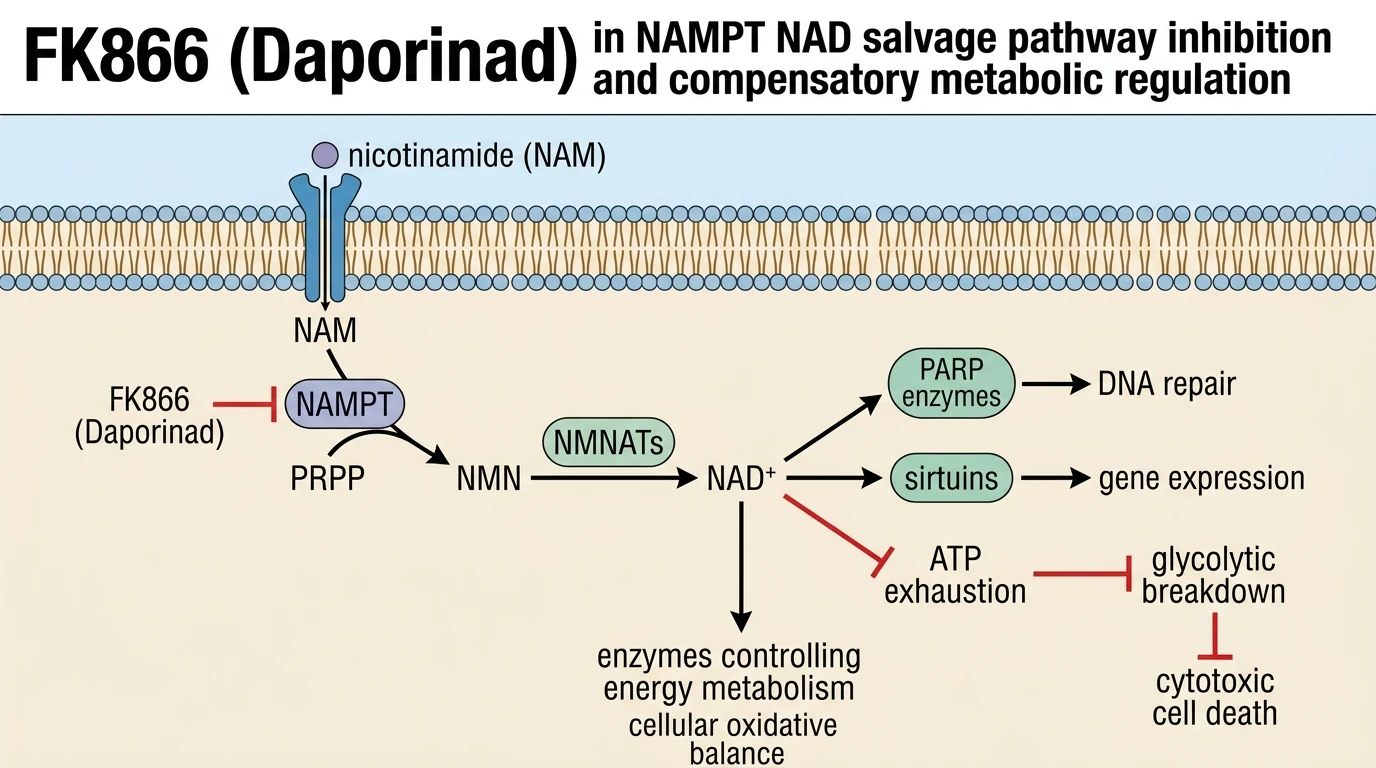
Nicotinamide phosphoribosyltransferase operates as the rate-limiting enzymatic controller within the primary NAD+ salvage pathway of mammalian cells. The small-molecule inhibitor FK866 (Daporinad) binds directly to the active dimerization interface of NAMPT, effectively blocking the enzymatic condensation of nicotinamide with 5-phosphoribosyl-1-pyrophosphate. Structural characterization of the NAMPT catalytic binding pocket structure reveals that FK866 occupies an elongated enzymatic tunnel, competing directly with the nicotinamide substrate. This competitive engagement stops the generation of nicotinamide mononucleotide, causing rapid depletion of intracellular oxidized nicotinamide adenine dinucleotide pools. Because transformed cells rely heavily on elevated baseline NAD+ turnover to sustain continuous glycolysis and DNA repair, target inhibition by FK866 produces ATP depletion, loss of poly(ADP-ribose) polymerase function, and cell death.
Despite initial cytotoxic activity observed across preclinical models, chronic exposure to pharmacological target inhibition frequently yields drug-resistant sub-populations. Genetic profiling of resistant cancer cell lines demonstrates that this acquired resistance arises independently of secondary mutations within the NAMPT gene coding sequence. The catalytic domain remains structurally intact and wild-type in sequence. Instead of mutating the drug target, resistant cells survive chronic enzymatic suppression by executing systemic metabolic rewiring to bypass reliance on the canonical salvage cascade.
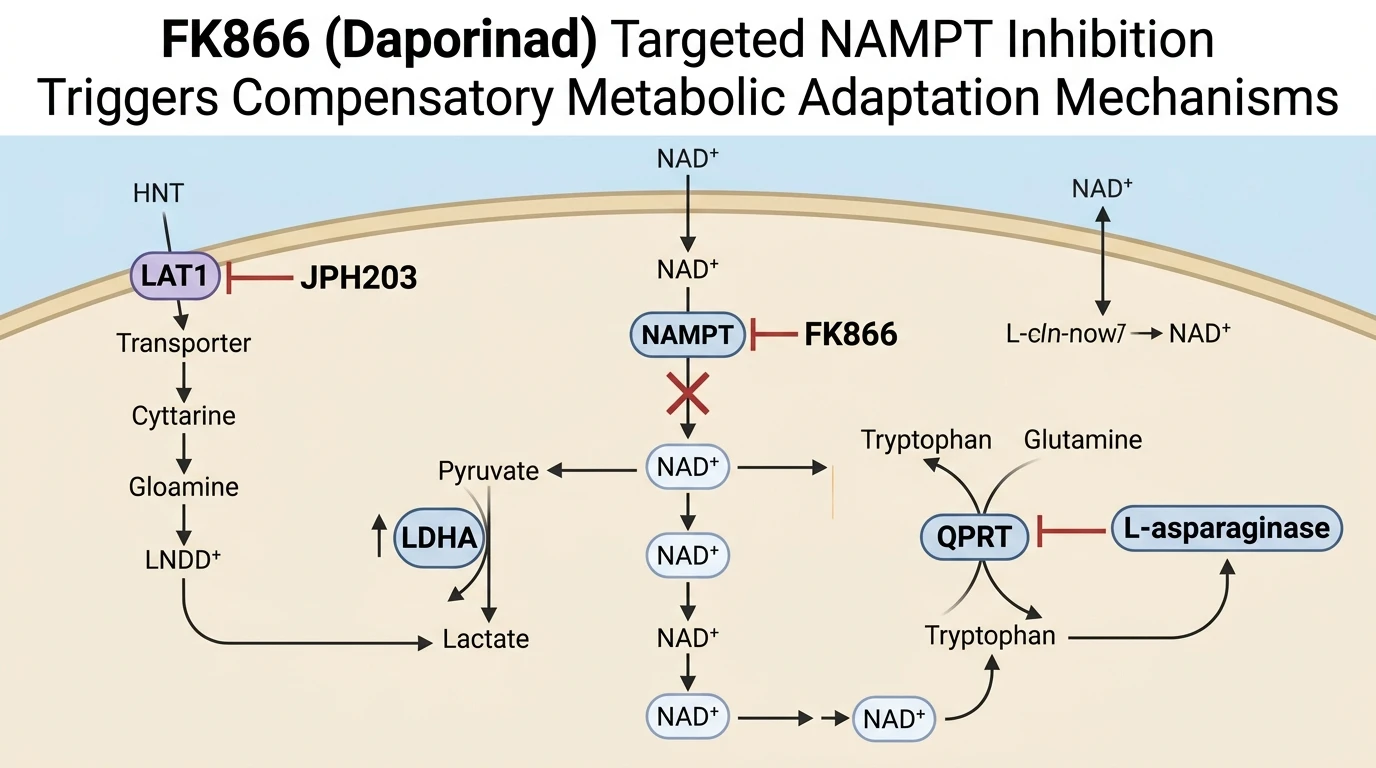
A central compensatory response involves marked enhancement of glycolytic flux. Under continuous drug exposure at physiologically relevant concentrations, resistant cells offset severe NAD+ exhaustion by upregulating lactate dehydrogenase A activity. Increased LDHA expression accelerates the reduction of pyruvate to lactate, generating a localized cytosol supply of oxidized NAD+. This enzymatic shift preserves glycolytic ATP production even when NAMPT activity is suppressed. In patient-derived cell models, co-treating resistant tumors with selective LDHA inhibitors restores sensitivity to the primary compound, confirming that compensatory aerobic glycolysis directly maintains cell viability during prolonged target suppression.
The specific metabolic adaptation route utilized by resistant cells depends heavily on baseline tissue-of-origin enzymatic profiles. Neoplasms displaying different expression levels of nicotinic acid phosphoribosyltransferase (NAPRT) or quinolinate phosphoribosyltransferase (QPRT) navigate drug pressure through distinct bioenergetic pathways. For example, NAPRT-expressing breast adenocarcinoma models, such as MDA-MB-231 cells, rely predominantly on LDHA-mediated glycolytic flux to tolerate drug treatment. In contrast, NAPRT-deficient hematologic malignancies exhibit entirely different metabolic dependencies under identical selection conditions.
In NAPRT-negative T-cell acute lymphoblastic leukemia models, including the CCRF-CEM cell line, cells exhibit baseline upregulation of QPRT. When challenged with FK866, these leukemic cells switch reliance from the salvage pathway to de novo NAD+ biosynthesis. QPRT catalyzes the conversion of quinolinic acid into nicotinic acid mononucleotide, drawing precursors from tryptophan and glutamine catabolism. This reliance on alternative amino acid utilization exposes distinct cellular metabolic vulnerabilities. Selective inhibition of the LAT1 amino acid transporter using the small molecule JPH203 blocks essential tryptophan influx. Simultaneously, enzymatic depletion of circulating glutamine via L-asparaginase disrupts downstream amidation steps in the de novo synthetic pathway. Combining LAT1 transport inhibition or glutamine depletion with NAMPT blockade suppresses this compensatory mechanism, triggering cell death in resistant leukemic populations.
Metabolic Rewiring and Dual Targeting Strategies
Copy code to add this image to your page
FK866 (Daporinad) potently inhibits NAMPT, exhausting cellular NAD+ pools. Cancer cells acquire resistance without NAMPT gene mutations by executing metabolic reprogramming. Resistant models rely on increased LDHA-mediated aerobic glycolytic flux to offset NAD+ depletion. Additionally, NAPRT-negative tumor cells upregulate QPRT to drive de novo NAD+ synthesis from tryptophan and glutamine. This metabolic adaptation creates distinct vulnerabilities. Inhibiting LDHA directly, blocking LAT1-mediated amino acid transport with JPH203, or depleting glutamine via L-asparaginase effectively overcomes acquired resistance in specific cellular backgrounds.
LDHA Glycolytic Flux Sustains Viability in Resistant Breast Cancer
Targeting NAMPT severely depletes intracellular NAD+ levels. However, cell lines often survive this pharmacological blockade. In NAPRT-expressing breast cancer models like MDA-MB-231, acquired resistance to FK866 develops independently of catalytic domain mutations. Instead, surviving cells shift toward enhanced aerobic glycolysis. Lactate dehydrogenase A (LDHA) catalytic activity increases significantly to maintain redox homeostasis. This metabolic bypass preserves ATP production despite persistent enzyme suppression. In patient-derived cell models, co-administration of LDHA inhibitors restores cytotoxic sensitivity under in vitro conditions.
QPRT Mediates Tryptophan Catabolism in NAPRT-Deficient Leukemia Models
Alternative NAD+ synthesis pathways sustain survival when salvage mechanisms fail. CCRF-CEM T-ALL cells lack NAPRT expression entirely. These leukemia models express high baseline levels of quinolinate phosphoribosyltransferase (QPRT). Under persistent pharmacological pressure from FK866, QPRT utilizes tryptophan and glutamine catabolism for de novo NAD+ generation. This metabolic shift creates actionable vulnerabilities. Pharmacological inhibition of the LAT1 amino acid transporter via JPH203 selectively suppresses tryptophan uptake. Similarly, treatment with L-asparaginase depletes circulating glutamine reserves. Dual metabolic targeting effectively abrogates resistance in these hematologic lineages.