GW9662 blocks PPARγ signaling to demonstrate C21-mediated AT2 receptor activation in diabetes
Copy code to add this image to your page
Peroxisome proliferator-activated receptor gamma (PPARγ) operates as a ligand-activated transcription factor within the nuclear receptor superfamily, serving as a primary regulator of adipocyte differentiation, lipid storage, and systemic glucose homeostasis. In the context of type 2 diabetes mellitus (T2DM), signaling crosstalk between non-canonical renin-angiotensin system (RAS) components and nuclear receptors represents a critical regulatory axis for metabolic control. Angiotensin II type 2 (AT2) receptor stimulation by selective small-molecule agonists, such as Compound 21 (C21), consistently improves metabolic parameters in rodent models of insulin resistance. To establish whether these systemic therapeutic phenotypes depend strictly on downstream PPARγ transcriptional activation, chemical loss-of-function strategies employing highly specific pharmacologic antagonists are required.
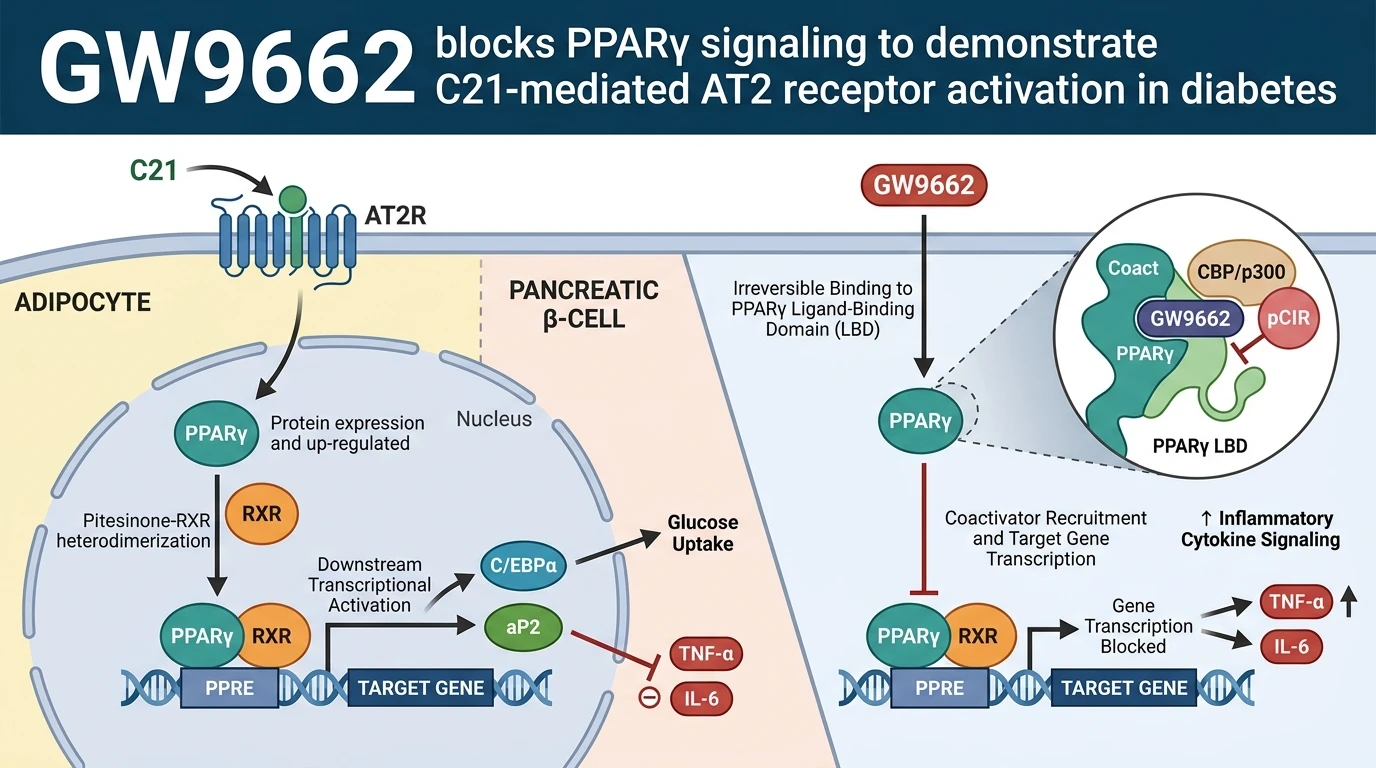
The synthetic compound GW9662 functions as a potent, irreversible, and selective PPARγ antagonist. Mechanistically, GW9662 engages the ligand-binding pocket of PPARγ and forms a covalent alkyl bond with a conserved cysteine residue (Cys285). This irreversible chemical modification alters the structural conformation of the ligand-binding domain, permanently preventing coregulator recruitment and blocking both basal and ligand-induced transcriptional activity. In functional investigations using diabetic KK-Ay mice, GW9662 was deployed to dissect the specific contribution of PPARγ activation to AT2 receptor-driven pharmacology.
Systemic administration of C21 in KK-Ay mice produces distinct anti-diabetic and insulin-sensitizing biological responses. Treated animals exhibit accelerated glucose clearance during oral glucose tolerance tests, lowered fasting blood glucose, and enhanced systemic insulin sensitivity. At the tissue level, C21 stimulates 2-deoxyglucose uptake in isolated epididymal adipose tissue and restores circulating levels of adiponectin, an insulin-sensitizing adipokine. Concurrently, C21 suppresses circulating concentrations of key proinflammatory cytokines, specifically tumor necrosis factor-alpha (TNF-α), interleukin-6 (IL-6), and monocyte chemoattractant protein-1 (MCP-1). At the molecular level, C21 enhances PPARγ protein expression and increases PPARγ binding to peroxisome proliferator response elements (PPRE) within target gene promoters. This transcriptional activation drives key adipocyte differentiation markers, including CCAAT/enhancer-binding protein alpha (C/EBPα) and fatty acid-binding protein 4 (aP2/FABP4). Furthermore, C21 exerts protective effects on pancreatic β-cell architecture, reducing islet apoptosis and preserving insulin immunoreactivity.
Co-administration of GW9662 markedly blunted C21-induced physiological improvements in KK-Ay mice. Simultaneous treatment with GW9662 reversed C21-mediated improvements in glucose tolerance and peripheral insulin sensitivity. Adipose tissue glucose uptake returned toward baseline diabetic levels, and serum adiponectin elevation was prevented. Moreover, GW9662 co-administration abolished the anti-inflammatory efficacy of C21, resulting in persistent elevations of TNF-α, IL-6, and MCP-1 in serum and adipose tissue extracts.
At the chromatin and protein levels, GW9662 blocked the C21-stimulated upregulation of PPARγ protein expression and blunted PPARγ DNA-binding activity in nuclear fractions. Consequently, downstream expression of differentiation markers C/EBPα and aP2 was severely attenuated. In pancreatic histology, GW9662 neutralized the protective action of C21 against β-cell degeneration, resulting in marked islet vacuolization and reduced functional β-cell mass under diabetic stress. Critically, administration of GW9662 alone in KK-Ay control mice produced no significant alterations in baseline blood glucose, serum cytokine levels, or tissue morphology compared to vehicle-treated controls. This confirms that GW9662 acts as a neutral agent in the absence of exogenous activation and that its blunting effect is specifically driven by PPARγ target inhibition.
Collectively, these data demonstrate that C21-mediated AT2 receptor activation relies on downstream PPARγ pathway recruitment to rescue adipocyte function and preserve pancreatic β-cell integrity. Pharmacological blockade using GW9662 validates PPARγ as an indispensable molecular mediator of AT2 receptor agonist efficacy in metabolic disease models.
Pharmacological Characterization of PPARγ Crosstalk in Diabetic Models
Copy code to add this image to your page
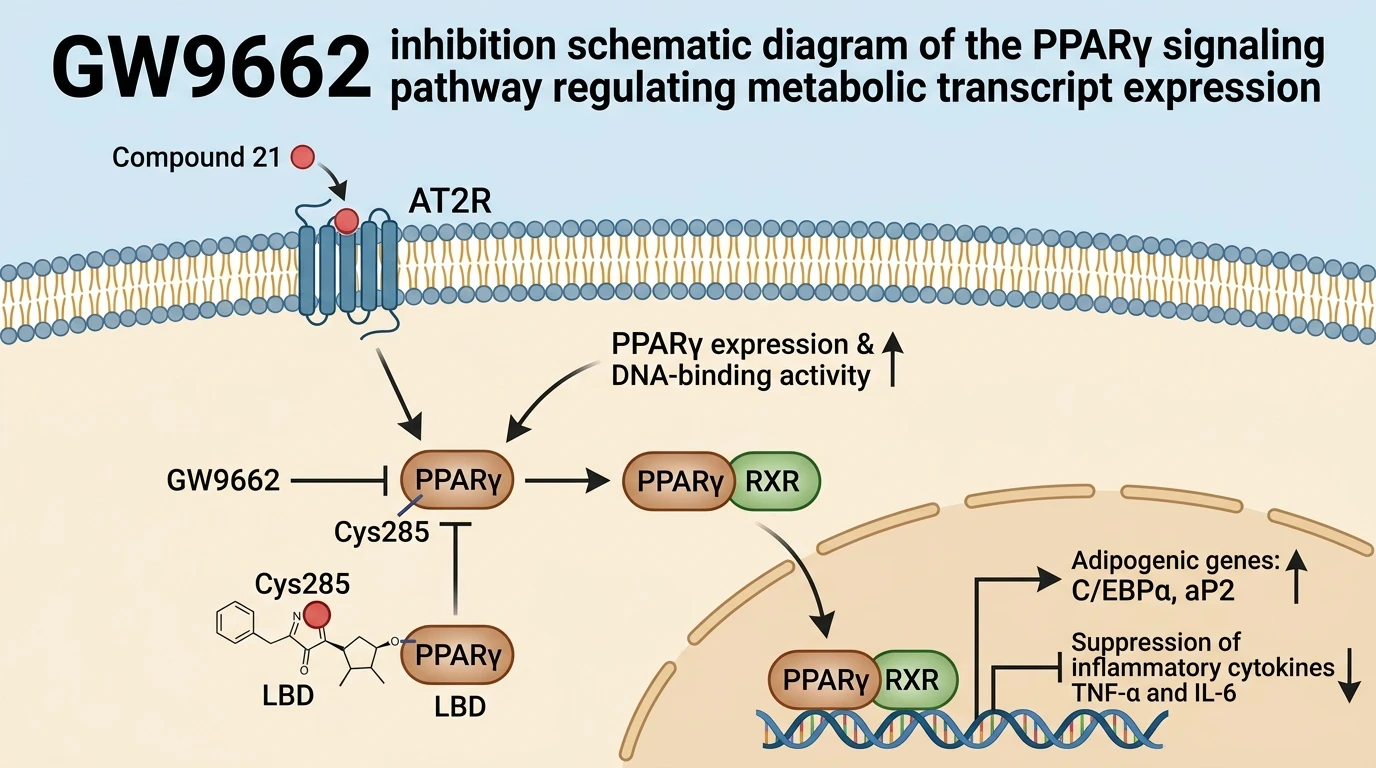
GW9662 is a selective, irreversible PPARγ antagonist that covalently modifies Cys285 in the ligand-binding domain. In diabetic models, GW9662 blocks PPARγ activation to demonstrate that AT2 receptor stimulation by C21 requires PPARγ transcription to improve glucose tolerance, restore insulin sensitivity, upregulate adipogenic markers C/EBPα and aP2, reduce TNF-α and IL-6, and protect pancreatic β-cell architecture.
PPARγ Antagonism Reverses C21-Mediated Insulin Sensitivity in KK-Ay Mice
In diabetic KK-Ay mice, C21 administration improves peripheral glucose disposal and suppresses systemic inflammatory cascades. Co-treatment with GW9662 abolished these metabolic adaptations within this murine disease model. Glucose uptake dropped sharply in visceral fat. Oral glucose tolerance testing confirmed that C21 failed to lower blood glucose excursions when PPARγ was covalently inhibited by GW9662. Serum adiponectin levels remained depressed while circulating concentrations of TNF-α, IL-6, and MCP-1 remained elevated under co-treatment conditions. Single-agent exposure to GW9662 induced no baseline changes in glucose tolerance or inflammatory markers in control animals. This confirms target specificity.
Targeted Inhibition Prevents C21-Induced C/EBPα Expression and β-Cell Protection
At the transcriptional level, C21 activates nuclear PPARγ to drive downstream adipocyte differentiation programs and protect pancreatic islet structure. Chemical antagonism blunted this pathway in tissue extracts. Nuclear translocation and DNA binding of PPARγ to peroxisome proliferator response elements were markedly suppressed under inhibitor co-administration. Downstream target protein levels of C/EBPα and aP2 fell significantly. In pancreatic histology, C21-treated islets showed preserved β-cell architecture and diminished vacuolization; however, PPARγ blockade reversed these protective morphology metrics. Pancreatic β-cell apoptosis increased under co-treatment conditions. These empirical observations establish that AT2 receptor stimulation requires active PPARγ transcription to exert anti-diabetic activity in vivo.