WNT974 (LGK974) Inhibition of Porcupine Blocks miR1-2 Mediated Cardiac Differentiation in BMSCs
Copy code to add this image to your page
Direct reprogramming of stem cells into cardiac lineages represents a major objective in regenerative pharmacology. In mouse bone marrow-derived mesenchymal stem cells (BMSCs), forced expression of microRNA miR1-2 initiates line-specific differentiation into cardiomyocyte-like cells. Traditional chemical induction protocols often rely on DNA methyltransferase inhibitors such as 5-azacytidine (5-aza). However, 5-aza induces substantial cellular toxicity and off-target genomic alterations; its therapeutic window remains severely constrained in experimental assays. Comparative evaluation demonstrates that ectopic miR1-2 expression drives significantly higher transcript and protein levels of core cardiac transcription factors, including GATA-binding protein 4 (GATA4) and NK2 homeobox 5 (Nkx2.5). Concurrently, expression of cardiac troponin I (cTnI) increases substantially. Crucially, miR1-2 induction achieves these phenotypic changes while maintaining superior cell viability. Apoptotic rates in miR1-2-transfected BMSCs remain lower than those observed under standard 5-aza induction protocols.
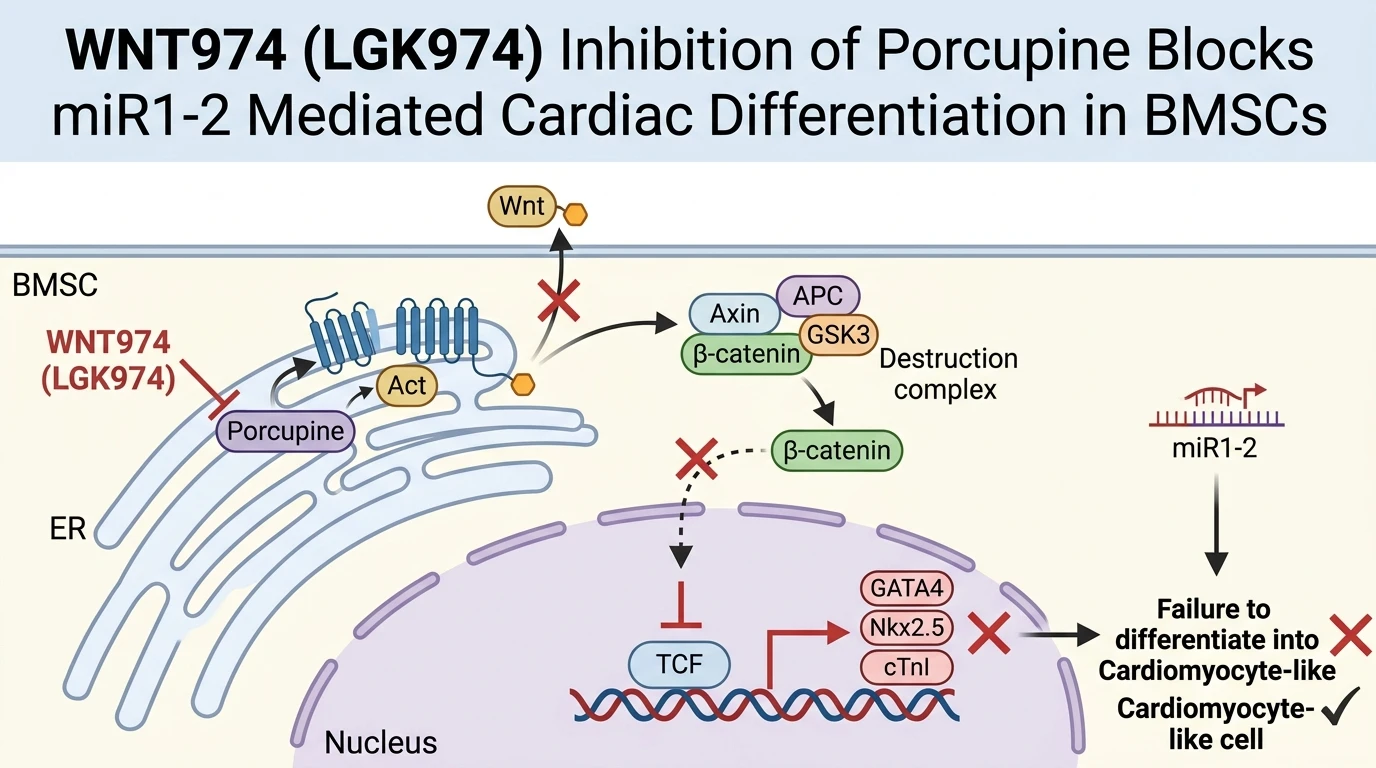
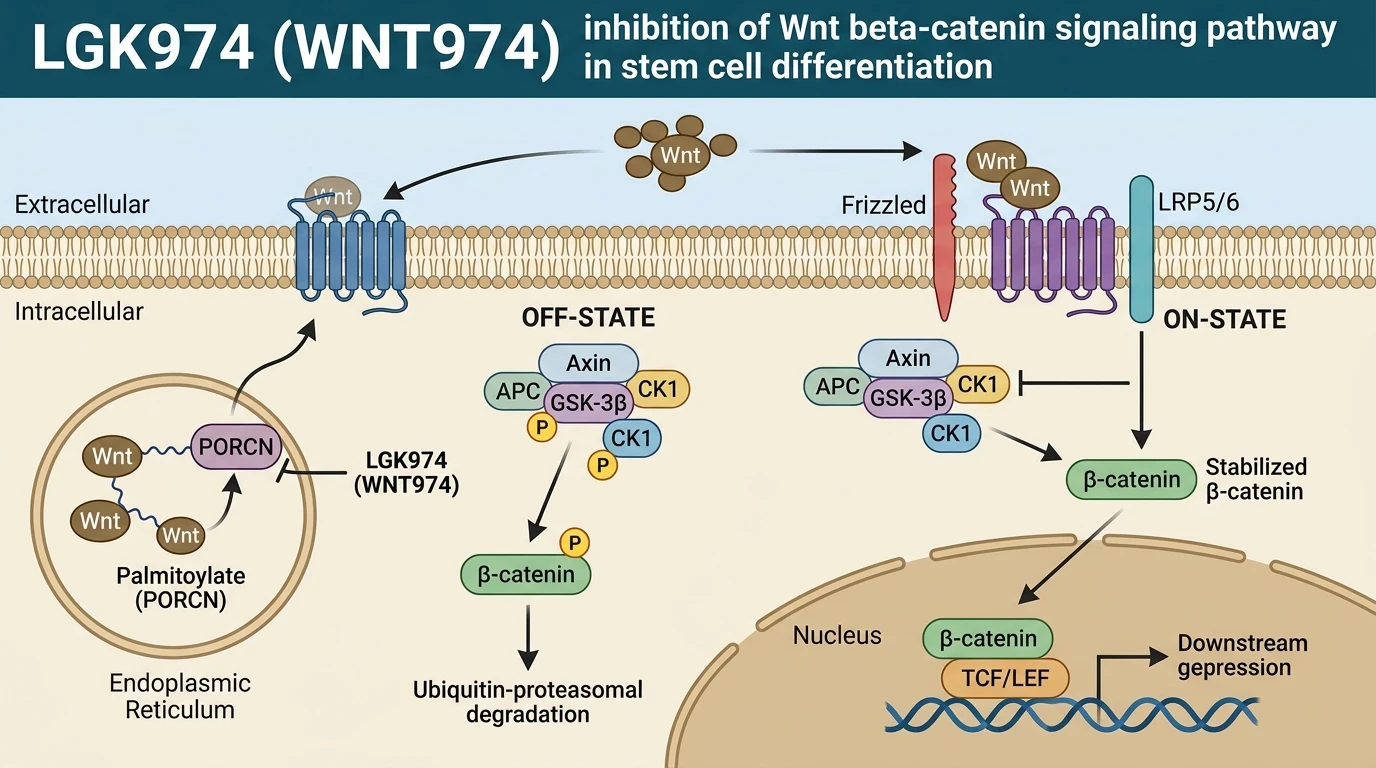
Mechanistic dissection indicates that miR1-2-induced cardiomyogenesis operates via intentional upregulation of the canonical Wnt/β-catenin signaling cascade. Transfection with miR1-2 elevates key intracellular pathway components, notably β-catenin, Wnt11, T cell factor (TCF), and c-Jun N-terminal kinase (JNK). In primary mouse BMSC cultures, post-translational lipid modification of Wnt proteins is a mandatory prerequisite for intracellular trafficking. Without PORCN-mediated palmitoylation, Wnt ligands remain trapped in the endoplasmic reticulum, preventing interaction with Frizzled cell-surface receptors and LRP5/6 coreceptors. To establish whether Wnt pathway activation is indispensable for this cell fate transition, investigators utilized LGK974 (WNT974), a potent and selective inhibitor of the membrane-bound O-acyltransferase Porcupine (PORCN). Porcupine executes the essential O-palmitoylation of Wnt proteins within the endoplasmic reticulum—a post-translational modification required for Wnt secretion and subsequent receptor engagement. Application of LGK974 (WNT974) directly disrupts this biochemical maturation step, intersecting with cellular apoptotic response networks. By blocking PORCN activity, LGK974 (WNT974) prevents autocrine and paracrine Wnt ligand signaling in treated BMSC cultures.
Pharmacological intervention with LGK974 (WNT974) provides definitive evidence regarding pathway dependency. When miR1-2-expressing BMSCs receive concurrent treatment with LGK974 (WNT974), the expected upregulation of canonical and non-canonical signaling nodes is suppressed. Quantitative western blotting and transcript profiling confirm that LGK974 (WNT974) blunts the accumulation of unphosphorylated cytosolic β-catenin. Consequently, nuclear translocation of β-catenin is prevented; activation of TCF-dependent promoter sequences encoding cardiogenic proteins ceases. Intracellular β-catenin accumulation diminishes; downstream nuclear transcription mediated by TCF factors is attenuated. Similarly, protein levels of Wnt11 and phosphorylated JNK decline back toward baseline control levels. Most strikingly, suppression of Wnt signaling via LGK974 (WNT974) halts the expression of differentiation marker proteins GATA4, Nkx2.5, and cTnI. These empirical data confirm that miR1-2 does not act through isolated or redundant signaling loops; rather, its capacity to instruct cardiac lineage commitment relies on an intact, active Wnt/β-catenin signaling axis.
The application of WNT974 highlights subtle distinctions between upstream microRNA activity and downstream receptor-mediated cascades. Although miR1-2 acts as an upstream driver of differentiation genes, its primary functional target involves activating Wnt ligand processing and downstream transcriptional machinery. Inhibiting PORCN with WNT974 demonstrates that blocking ligand secretion neutralizes the cardiogenic cues delivered by miR1-2. Under tested in vitro assay conditions, cell survival remains intact following PORCN blockade, whereas specific lineage transition markers disappear. This selective suppression confirms that cardiac gene expression cascades require sustained activation of the Wnt/β-catenin axis. These mechanistic findings establish LGK974 (WNT974) as a precise tool for dissecting microRNA-mediated stem cell fate decisions in regenerative research.
Pharmacological Interruption of Wnt Signaling in Stem Cell Lineages
Copy code to add this image to your page
Overexpression of miR1-2 induces cardiomyocyte differentiation in mouse bone marrow-derived mesenchymal stem cells by engaging the Wnt/β-catenin axis. Pharmacological inhibition using LGK974 (WNT974), a selective Porcupine acyltransferase inhibitor, abrogates this differentiation cascade. Treatment suppresses downstream node proteins including β-catenin, Wnt11, TCF, and JNK, while diminishing cardiac marker expression (GATA4, Nkx2.5, cTnI). This mechanistic block confirms that miR1-2-driven cardiac lineage commitment depends strictly on functional Wnt ligand secretion and subsequent pathway activation.
miR1-2 Upregulates Cardiac Markers with Minimal Cytotoxicity
Direct comparison between microRNA-mediated induction and chemical differentiation reveals distinct cellular phenotypes in mouse BMSCs. Treatment with 5-azacytidine induces cardiac marker proteins but yields elevated cytotoxicity and pronounced apoptotic clearance. Conversely, ectopic expression of miR1-2 drives robust expression of GATA4, Nkx2.5, and cTnI. Cellular viability remains high throughout the induction phase. Flow cytometric analysis confirms lower annexin-V positivity in miR1-2-transfected populations. These observations demonstrate that miR1-2 provides a favorable safety profile during BMSC lineage commitment under tested culture conditions.
PORCN Blockade via WNT974 Prevents Downstream β-Catenin Activation
To evaluate pathway dependency, cultured stem cells were exposed to the Porcupine inhibitor WNT974. Porcupine inhibition halts Wnt ligand secretion. In the presence of WNT974, miR1-2 fails to elevate cytosolic β-catenin levels. TCF transcriptional reporter activity drops significantly. Cardiac marker induction is entirely abrogated; expression of cTnI and Nkx2.5 returns to baseline levels. These biochemical findings demonstrate that miR1-2 requires extracellular Wnt secretion to drive cardiogenesis. Inhibiting PORCN serves as a selective off-switch for microRNA-induced cardiac reprogramming.
Suppression of Wnt11 and JNK Axes Halts Lineage Progression
Beyond the canonical β-catenin pathway, non-canonical Wnt components modulate stem cell differentiation. Ectopic miR1-2 expression elevates Wnt11 and JNK phosphorylation in mouse BMSCs. Administration of LGK974 suppresses Wnt11 accumulation. Downstream JNK phosphorylation decreases synchronously. The loss of non-canonical signaling correlates with reduced GATA4 promoter binding. These observations highlight a dual requirement for canonical and non-canonical signaling branches during microRNA-driven BMSC cardiac differentiation.