Mito-TEMPO MitoTEMPO mtROS Scavenging Protects Diabetic Cardiomyocytes From Hypoglycemic Injury
Copy code to add this image to your page
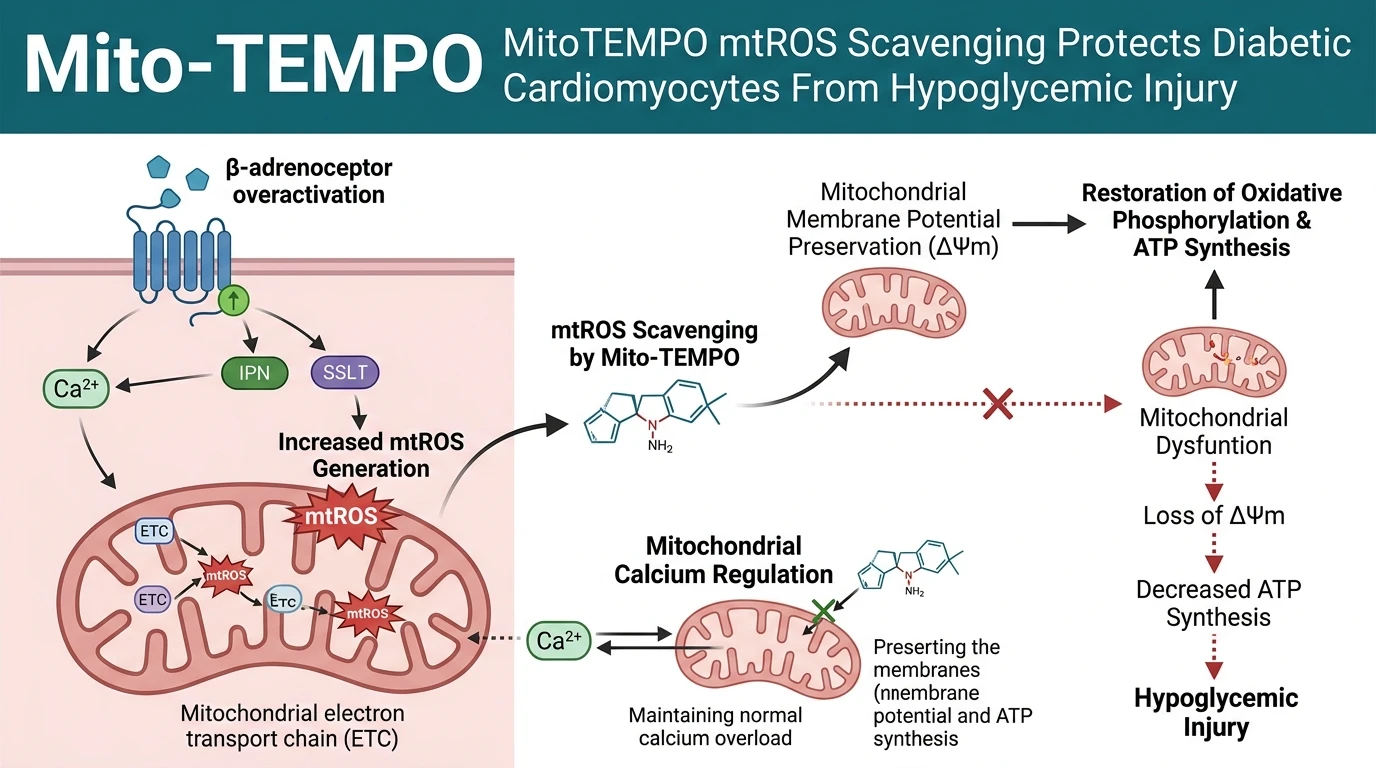
In diabetic hearts, elevated fatty acid oxidation impairs the cellular defense against sympathetic surges occurring during severe hypoglycemia. Excessive β-adrenoceptor stimulation under high fatty acid availability triggers severe metabolic dysregulation within ventricular myocytes. The primary catalyst for this synergistic injury is the excessive production of mitochondrial reactive oxygen species (mtROS). Electron transport chain leakage elevates superoxide production beyond intracellular enzymatic neutralization thresholds. This localized oxidative burst impairs mitochondrial bioenergetics and initiates cardiomyocyte structural deterioration.
Mito-TEMPO is a cell-permeable, mitochondria-targeted antioxidant consisting of a piperidine nitroxide moiety coupled to a lipophilic triphenylphosphonium cation. This ionic construct drives accumulation of the compound across the inner mitochondrial membrane, dictated by the negative mitochondrial membrane potential. Within the matrix, MitoTEMPO acts as a catalytic superoxide dismutase mimetic, rapidly detoxifying superoxide radicals directly at their primary site of formation.
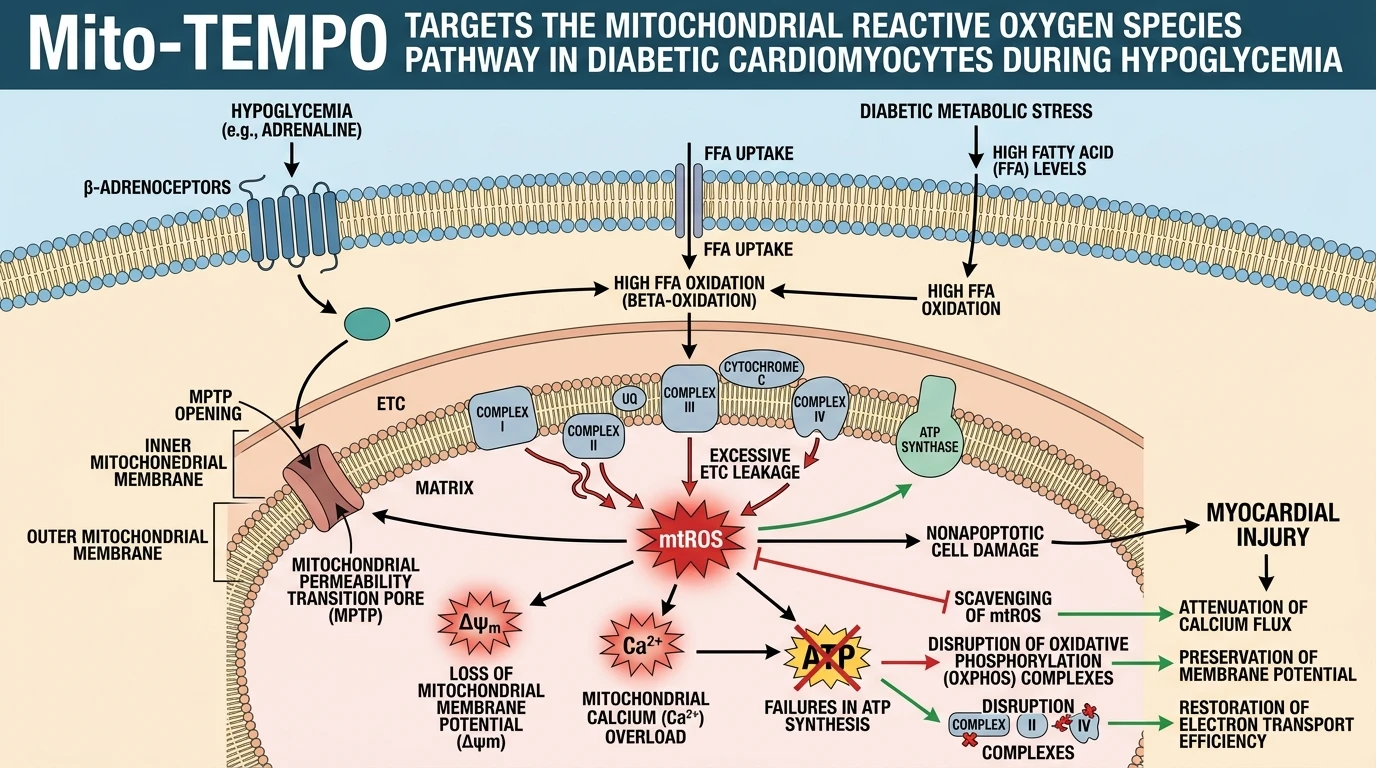
Experimental models combining elevated free fatty acids with β-adrenergic stimulation exhibit marked accumulation of both mitochondrial and cytosolic reactive species. Under these metabolic conditions, electron flux through complex I and complex III becomes uncoupled, elevating local matrix peroxide and superoxide generation. This persistent oxidative stress causes opening of the mitochondrial permeability transition pore and promotes aberrant calcium influx into the matrix. Matrix calcium overload subsequently collapses membrane potential, arresting the proton gradient required for ATP synthase activity.
Exogenous administration of Mito-TEMPO interrupts this toxic cascade. By lowering localized mtROS levels, the scavenger stabilizes membrane potential and prevents excessive calcium flux into the organelle matrix. In primary diabetic cardiomyocyte cultures subjected to β-agonist challenge under high palmitate conditions, treatment maintained mitochondrial structural integrity and preserved cristae organization. In addition, electron transport chain activity was preserved, yielding higher cellular ATP concentrations relative to untreated vehicle controls.
In vivo evaluation using streptozotocin-induced diabetic mice subjected to hyperinsulinemic-hypoglycemic clamps confirmed these cellular observations. Severe hypoglycemia induces massive catecholamine discharge, exacerbating myocardial oxidative burden in diabetic animals. Systemic administration of Mito-TEMPO significantly attenuated cardiac ROS accumulation. Echocardiographic assessments revealed a substantial recovery of left ventricular fractional shortening and ejection fraction. At the molecular level, key energy metabolism enzymes—including AMP-activated protein kinase and pyruvate dehydrogenase—exhibited normalized phosphorylation patterns.
Importantly, cell death in this context occurred predominantly through nonapoptotic necrotic pathways linked to energetic failure rather than classical caspase-dependent apoptosis. By maintaining oxidative phosphorylation, Mito-TEMPO suppressed sarcolemmal rupture and lactate dehydrogenase leakage. These empirical data establish that targeted mitochondrial antioxidant delivery mitigates metabolic dysfunction independently of systemic glucose levels.
Pharmacological Evaluation of Mitochondrial ROS Scavenging
Copy code to add this image to your page
Mito-TEMPO acts as a mitochondrially targeted antioxidant that selectively scavenges superoxide and mtROS within the inner mitochondrial membrane. By suppressing localized reactive oxygen species accumulation during β-adrenoceptor hyperactivation, it prevents mitochondrial calcium overload and preserves mitochondrial membrane potential. This restoration of electron transport chain integrity normalizes oxidative phosphorylation and ATP generation. Consequently, Mito-TEMPO prevents nonapoptotic cardiomyocyte necrosis and restores contractile performance in diabetic animal models exposed to severe hypoglycemia.
Suppression of mtROS Prevents Cardiomyocyte Calcium Overload
High fatty acid oxidation destabilizes mitochondrial bioenergetics during acute catecholamine surges. In diabetic cardiomyocytes, β-adrenoceptor overactivation accelerates mtROS production—elevating matrix superoxide levels three-fold within thirty minutes of agonist exposure. Mito-TEMPO treatment blunted this oxidative burst under tested in vitro conditions. Cellular superoxide concentrations returned toward baseline. Consequently, excessive mitochondrial calcium influx was inhibited, preventing matrix swelling and membrane destabilization. Membrane potential remained stable across treated experimental groups. Preserving this electrochemical gradient protected cristae morphology from degradation—thereby maintaining ATP synthesis despite high metabolic stress.
Restoration of Myocardial Contractility in Diabetic Mice
In vivo administration delivered clear functional improvements during severe hypoglycemic stress. Diabetic mice exhibited marked cardiac contractile failure following hyperinsulinemic clamps. Systemic treatment with MitoTEMPO rescued left ventricular ejection fraction; contractility metrics improved significantly relative to untreated controls. Myocardial tissue lysates displayed normalized expression of key oxidative phosphorylation proteins. Cellular necrosis markers dropped sharply. Cytosolic lactate dehydrogenase release was reduced by forty percent in treated cohorts. These empirical observations confirm that targeted scavenging of mtROS attenuates hypoglycemia-induced cardiac dysfunction.