Epirubicin HCl Regulates FOXK2 FOXO3a Axis in Breast Cancer Apoptosis
Copy code to add this image to your page
Targeting transcriptional networks represents a primary strategy to enhance chemosensitivity in solid tumors. In luminal and triple-negative breast cancer models, anthracyclines elicit complex nuclear signaling cascades that determine cell fate. Epirubicin HCl exerts cytotoxic activity primarily through DNA intercalation and topoisomerase II inhibition. However, downstream survival or apoptotic commitment depends heavily on transcription factor dynamics. Recent mechanistic evaluations demonstrate that the forkhead box factor FOXK2 operates as a crucial upstream regulator of drug-induced cytotoxicity.
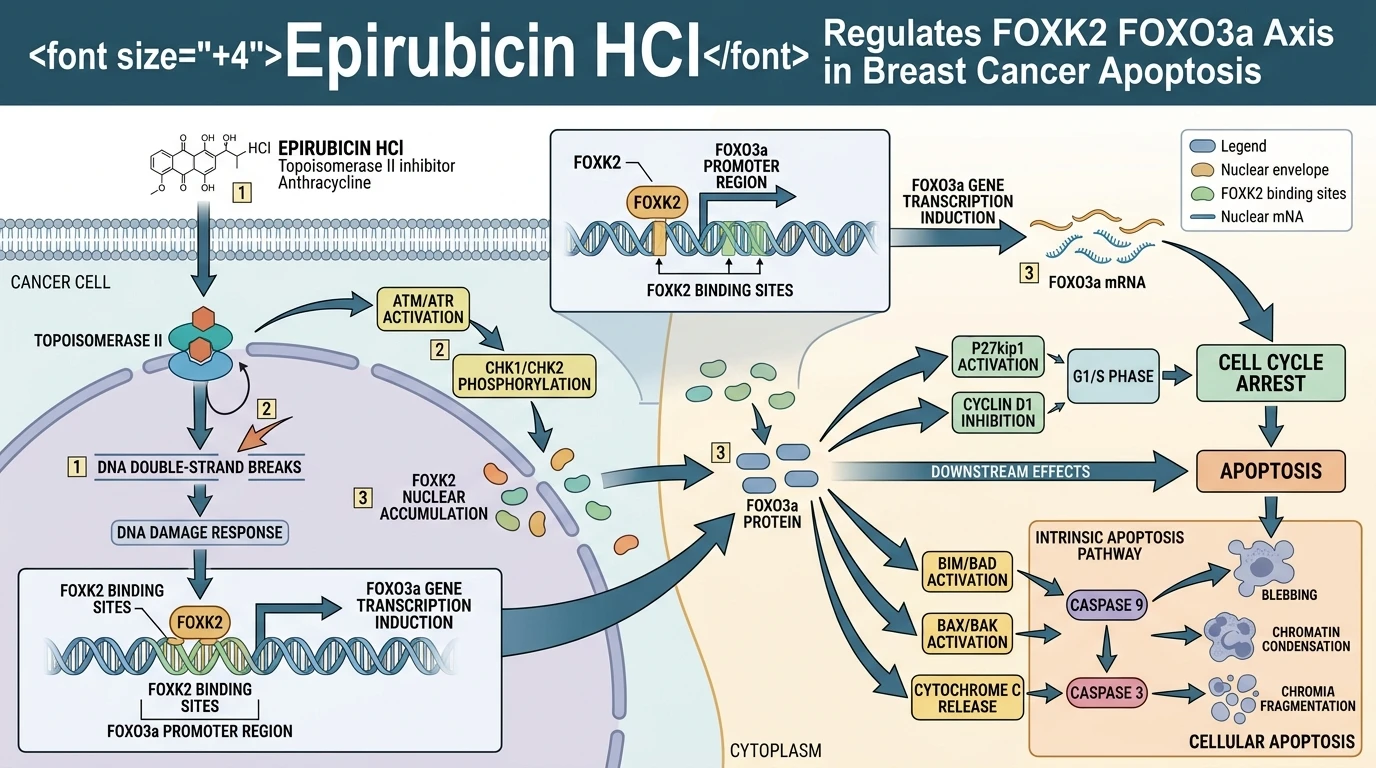
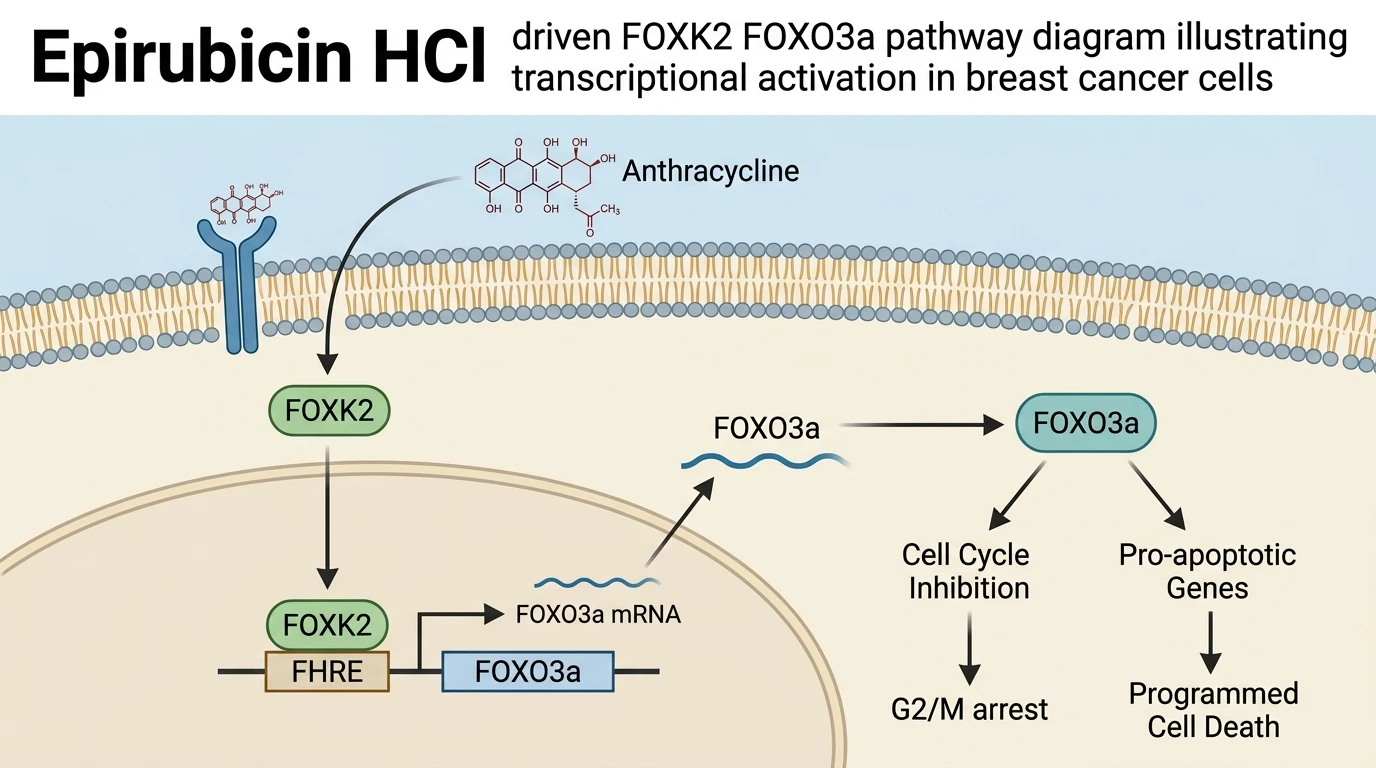
Under baseline conditions, FOXK2 maintains variable expression in the cytoplasm and nucleus. Treatment with Epirubicin HCl alters this spatial equilibrium promptly. Within hours of exposure at sub-micromolar concentrations, nuclear accumulation of FOXK2 increases markedly in drug-sensitive MCF-7 cells. This spatial shift depends on specific post-translational modifications triggered by DNA damage signaling. Once localized in the nuclear compartment, FOXK2 functions as a sequence-specific transcription factor. Chromatin immunoprecipitation assays reveal that nuclear FOXK2 directly engages the forkhead response element (FHRE) situated within the promoter region of the tumor suppressor FOXO3a.
Promoter binding by FOXK2 recruits transcriptional coactivators to initiate FOXO3a gene expression. As a result, FOXO3a mRNA transcript and protein levels rise substantially. FOXO3a subsequently drives the expression of downstream transcriptional targets, including the cyclin-dependent kinase inhibitor p21 (CDKN1A) and the pro-apoptotic BH3-only protein Bim. Cell cycle dynamics shift accordingly. G2/M arrest ensues rapidly. Mitochondria-mediated apoptotic pathways initiate shortly thereafter, marked by caspase-3 and caspase-9 cleavage.
Functional perturbation experiments confirm the necessity of this transcriptional pathway. Small interfering RNA (siRNA) mediated knock-down of FOXK2 severely dampens FOXO3a upregulation following chemotherapy exposure. Under tested in vitro assay conditions, FOXK2-silenced MCF-7 cells demonstrate a significant reduction in drug-induced apoptosis. Cellular viability remains largely sustained despite drug exposure. Conversely, ectopic overexpression of FOXK2 sensitizes parental breast cancer cells to lower therapeutic doses of Epirubicin HCl. The selectivity margin widens. These functional alterations demonstrate that FOXK2 expression level directly governs therapeutic response magnitude.
In acquired chemoresistant breast cancer cell lines, the functional integrity of this axis deteriorates. Resistant cell variants display altered sub-cellular FOXK2 distribution and marked loss of transcriptional activity at the FOXO3a locus. Even upon high-dose drug administration, FOXK2 fails to bind the FOXO3a promoter in resistant models. Consequently, FOXO3a transcript levels remain baseline. This transcriptional block prevents the downstream activation of apoptotic machinery. Clinical retrospective studies using patient tissue microarrays align with these cellular observations. High nuclear FOXK2 expression correlates with favorable treatment responses in primary, chemosensitive cohorts. However, deregulated or non-functional FOXK2 expression in previously treated patients correlates with reduced progression-free survival, marking the FOXK2-FOXO3a pathway as a primary determinant of treatment failure.
FOXK2 Mediated Transcriptional Control and Chemoresistance Dynamics
Copy code to add this image to your page
Epirubicin HCl induces nuclear accumulation of the transcription factor FOXK2 in breast cancer cells. FOXK2 directly binds the forkhead response element in the promoter region of FOXO3a, activating FOXO3a transcription. Elevated FOXO3a expression executes downstream cell cycle arrest and apoptotic cascades. Functional inactivation or silencing of FOXK2 disrupts this axis, reducing sensitivity to epirubicin.
FOXK2 Engagement of the FOXO3a Promoter Induces Apoptosis
Nuclear recruitment of FOXK2 following Epirubicin HCl exposure constitutes a rate-limiting step in transcriptional activation. Chromatin binding assays demonstrate high-affinity interaction with the forkhead response element. FOXO3a transcription rises sharply within six hours post-treatment. Downstream p21 expression follows. Consequently, cells halt progression at the G2/M checkpoint. Bim expression increases simultaneously. Outer mitochondrial membrane permeabilization accelerates. These sequential biochemical events ensure commitment to cell death in drug-sensitive models under tested in vitro assay conditions.
Transcriptional Silencing of FOXK2 Confers Acquired Drug Resistance
Deregulated transcription factor signaling frequently underlies treatment failure in refractory breast carcinoma. Drug-resistant cell phenotypes fail to accumulate nuclear FOXK2 upon challenge with Epirubicin HCl. Promoter binding activity is virtually absent. Consequently, FOXO3a induction remains undetectable. Genetic depletion of FOXK2 via shRNA constructs recapitulates this resistant state in treatment-naive cells. Cellular survival persists under high drug pressure. In contrast, restoring FOXK2 transcriptional capability reinstates apoptotic sensitivity. These findings position FOXK2-FOXO3a dysregulation as a diagnostic biomarker and therapeutic target in anthracycline-resistant breast cancer.